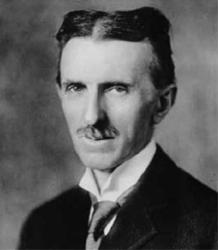
Geron Aleksandriyskiy
 Greece
- Biography of Hero of Alexandria
- Contributions to Applied Mechanics
- Pneumatics and Mechanical Devices
- Contributions to Optics
- Mathematical Works
- Influence and Legacy
Biography of Hero of Alexandria
Hero of Alexandria (probably 1st-2nd century AD) was an ancient Greek engineer, physicist, mechanic, mathematician, and inventor. He taught in Alexandria and his extensive scientific works have reached us almost in their entirety.
Contributions to Applied Mechanics
Hero described the major achievements of the ancient world in the field of applied mechanics. He invented a range of devices and automata, including a device for measuring the distance of roads, which operated on the same principle as modern taximeters, various water clocks, and more. He described the dioptra, the ancestor of the modern theodolite. Hero was the first to investigate the five types of simple machines: lever, pulley, wedge, screw, and block, laying the foundations of automation.
Pneumatics and Mechanical Devices
In his work "Pneumatics," Hero described a series of "magical tricks" based on the principles of using heat and pressure differentials. People were amazed by his wonders, such as temple doors opening by themselves when a fire was lit on the altar. This scientist invented an automaton for selling "holy" water and constructed a ball rotated by the force of a steam jet. He also invented a number of other devices and automata.
Contributions to Optics
Hero most comprehensively systematized the knowledge of ancient times in the field of optical phenomena. Following his works, all scientists began to divide optics into catoptrics, the science of reflection, and dioptrics, the science of the change of direction of light rays when entering transparent media, or what we now call refraction. Almost 1500 years before Fermat, Hero arrived at a particular formulation of his principle of reflection through purely geometric means: "I will say that among the rays coming from a given point and reflected to a given point, those that are reflected by flat and spherical mirrors are the shortest under equal angles." In his treatise "Catoptrics," Hero justifies the straightness of light rays by their infinitely high speed of propagation. Furthermore, he presents the proof of the law of reflection based on the assumption that the path traversed by light must be the shortest of all possible paths. Following the law of reflection, Hero considers various types of mirrors, paying special attention to cylindrical mirrors.
Mathematical Works
Hero's mathematical works serve as an encyclopedia of ancient applied mathematics. In his best work, "Metrica," he provides rules and formulas for the exact and approximate calculation of the areas of regular polygons, volumes of truncated cones and pyramids, and presents the so-called Hero's formula for determining the area of a triangle based on its three sides, which is also found in the works of Archimedes. He provides rules for numerical solutions of quadratic equations and the approximate extraction of square and cubic roots. The content of Hero's mathematical works is dogmatic, with rules often not derived but explained through examples. This brings Hero's works closer to the works of mathematicians from Ancient Egypt and Babylon.
Influence and Legacy
The influence of Hero's works can be traced in Europe up until the Renaissance era. In 1814, Hero's work "On Dioptrics" was discovered, which outlined the rules for land surveying, essentially based on the use of rectangular coordinates. Hero's contributions to various scientific fields have left a lasting impact on the development of knowledge and continue to be studied and appreciated to this day.