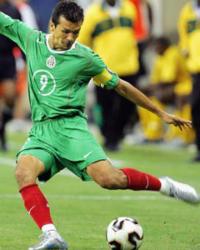
Gerson Nunes de Oliveira
- Gérson: The Maestro of Brazilian Midfield
- Early Life and Career
- Transition to Midfield and National Team Debut
- The 1970 World Cup Triumph
- Later Career and Retirement
- Personal Life and Legacy
Gérson: The Maestro of Brazilian Midfield
Gérson de Oliveira Nunes, known simply as Gérson, is widely regarded as one of Brazil's greatest midfielders of all time, even surpassing legends like Didi and Zizinho.
Early Life and Career
Born in Niterói, Rio de Janeiro, Gérson began his career with Flamengo as a striker. In 1958, he made his debut as a teenager and scored a goal in the Rio de Janeiro championship. Gérson was a prolific goalscorer, netting 80 times for Flamengo before leaving in 1963.
He also won youth titles with Flamengo and represented Brazil at the 1960 Olympics, catching the attention of European clubs. However, Gérson declined an offer from Bologna in 1961, citing his fear of facing more experienced players in Italy.
Transition to Midfield and National Team Debut
Gérson gradually moved into midfield and established himself as one of the best central midfielders in Brazil by the time he joined Botafogo in 1963. His exceptional passing range and ball control became his calling card.
He made his international debut for Brazil in 1961 and played in the 1966 World Cup qualification matches, but an injury prevented him from participating in the tournament itself.
The 1970 World Cup Triumph
Gérson's career reached its peak with the 1970 FIFA World Cup in Mexico. He prepared meticulously for the tournament, but his over-enthusiasm may have backfired. The team's physician forced him to rest for ten days to prevent burnout.
Despite his initial setback, Gérson played a pivotal role in Brazil's victory. His tireless work rate, vision, and ability to control the midfield were instrumental in Brazil's dominance.
In the final against Italy, Gérson scored a stunning goal from outside the penalty area, giving Brazil a crucial lead. His performance sealed his place among the tournament's best players.
Later Career and Retirement
After the World Cup, Gérson experienced a series of club transfers between Botafogo and São Paulo. He won the São Paulo state championship in 1971. In 1972, he joined Fluminense, where he played for the last three seasons of his career.
Injuries plagued Gérson's later years, and he retired from football in 1974. He then pursued a career in journalism, becoming a respected commentator and writer.
Personal Life and Legacy
Gérson married Maria Helena de Oliveira, who shared the same surname. They have two daughters, Patricia and Cristiana.
Gérson's exceptional talent and contribution to Brazilian football have cemented his status as a legend. He is remembered as the maestro of the midfield, a player who combined skill, vision, and determination to achieve greatness.