Geta
 Ancient Rome
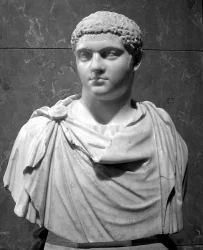
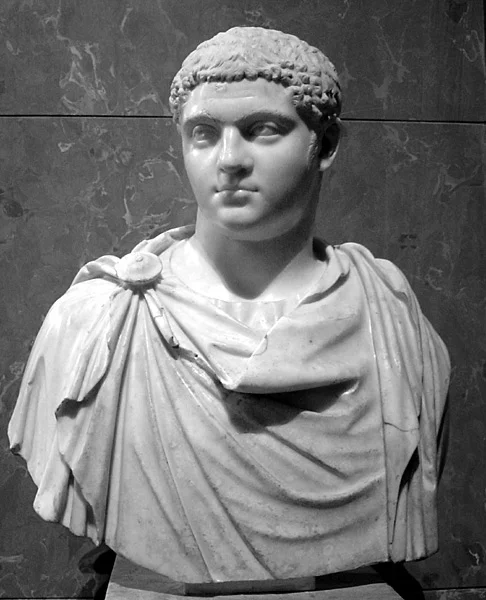
Geta was one of Rome’s youngest emperors, elevated alongside his brother Caracalla in the final years of their father’s reign. Their joint rule was meant to secure the Severan dynasty, but years of rivalry turned the succession into a deadly contest. Geta’s life ended only months after he and Caracalla inherited sole power, and the effort to erase his memory left historians with a fragmentary portrait.
A prince of the Severan dynasty
Born in Rome on March 7, 189, Publius Septimius Geta was the younger son of Septimius Severus and Julia Domna. His father had risen to power after the civil wars of 193 and established the Severan dynasty. The family traveled with the emperor during military campaigns, and Geta spent part of his youth in the provinces, including Britain, where Severus led a campaign against the Caledonians.
Severus gradually raised both sons to imperial rank. Caracalla, the elder, became Augustus first; Geta followed, and by 209 or 210 he held the same senior title. Their father’s policy suggested a shared succession, but the brothers’ relationship was bitter. Both gathered their own supporters, and tensions between them became an open concern at court.
Joint emperors in a divided court
When Septimius Severus died at Eboracum, modern York, in February 211, Caracalla and Geta became joint emperors. They returned to Rome, where they were expected to govern together. Ancient accounts describe plans to divide the empire between them, but their mother Julia Domna reportedly opposed such a separation. The brothers’ rivalry made effective cooperation impossible.
The sources describe the period from the perspectives of later historians and are often shaped by political agendas. Still, the final outcome is clear: in December 211, Caracalla’s soldiers killed Geta in the presence of his mother. Geta was about twenty-two years old. Caracalla then became sole emperor and ordered a purge of Geta’s supporters.
An emperor deliberately erased
Caracalla also tried to remove his brother from public memory. Geta’s name was erased from inscriptions, and images associated with him were altered or destroyed. This practice, known as damnatio memoriae, did not literally erase a person from history; instead, it made the traces of his rule harder to read. In some monuments, chiseled spaces still reveal where Geta’s name once appeared.
Because his reign was so brief and the records were targeted, little is known about Geta’s policies or personality apart from the dynastic conflict. His story is largely preserved through the struggle that consumed the Severan family. His death showed how fragile the Roman system of hereditary succession could be: even a father’s plan to share power between his sons could not prevent the empire from becoming the prize in a family feud.