Ghizela Vass
 Romania
- Early Life and Political Awakening
- Involvement in the Communist Party
- Rise Through the Party Ranks
- Party Leadership and Influence
- International Relations and Diplomatic Career
- Retirement and Legacy
Early Life and Political Awakening
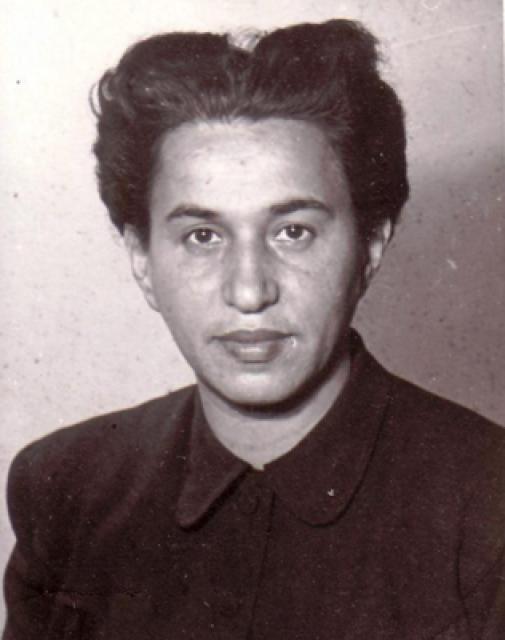
Ghizela Vass was born into a humble family of Bessarabian Jews. As a young woman, she worked as a seamstress in Chișinău, where she became involved in labor activism and joined the Textile Workers' Union in 1930. Her political consciousness grew during this period, and she became a member of the International Red Aid (MOPR) from 1931 to 1933.
Involvement in the Communist Party
In 1933, Vass joined the Romanian Communist Party (PCR). Her political activities caught the attention of the authorities, and she was arrested and imprisoned in the following years. During World War II, she was deported to a concentration camp in Transnistria.
Rise Through the Party Ranks
After the overthrow of the fascist regime in Romania in 1944, Vass held various positions within the Romanian Workers' Party (later renamed the RCP). From 1948 to 1952, she served as a candidate member of the Central Committee, and from 1952 to 1984, she was a full member. She became a trusted associate of Elena Ceaușescu in the 1950s.
Party Leadership and Influence
In 1953, Vass became Secretary of the Bucharest City Party Committee. Despite being briefly expelled from the Central Committee during an anti-Jewish campaign, she was reinstated in 1954. She held key positions within the party, including Deputy Head of the Organizational Department and member of the Secretariat.
International Relations and Diplomatic Career
From 1955 to 1982, Vass played a pivotal role in Romania's international relations. She headed the party's Department of Women's Work and later served as Inspector of the RCP Central Committee, Coordinator of the Foreign Cadres and External Relations Departments, and Head of the International Relations Department. Her responsibilities extended to international trade and economic cooperation.
Retirement and Legacy
In 1982, Nicolae Ceaușescu relieved Vass of her duties, and she retired. Despite her retirement, she retained her privileges and became Vice President of the Romanian Red Cross. Her grandson, Bogdan Olteanu, became President of the Romanian Chamber of Deputies.
The Presidential Commission for the Study of the Communist Dictatorship in Romania identified Vass as one of two key figures involved in the communist regime's foreign policy. Her awards included Hero of Socialist Labor of Romania, the Golden Hammer and Sickle Medal, and the Order of the Star of Romania.