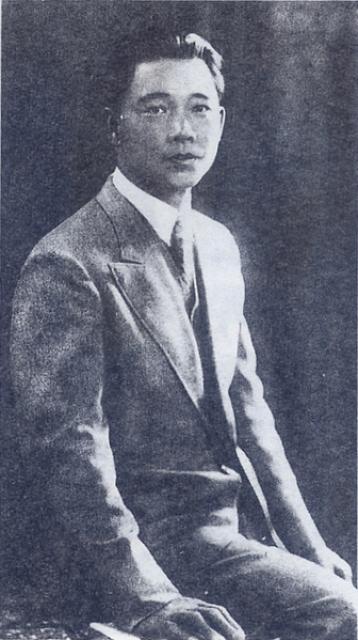
Jingwei Wang
 Japan
JapanBiography of Wang Jingwei
Wang Jingwei was a Chinese politician who belonged to the left wing of the Kuomintang. He was a rival of Chiang Kai-shek and led a collaborationist government in Nanjing during the Japanese occupation, although he actually resided in Japan, where he died.
Early Life and Education
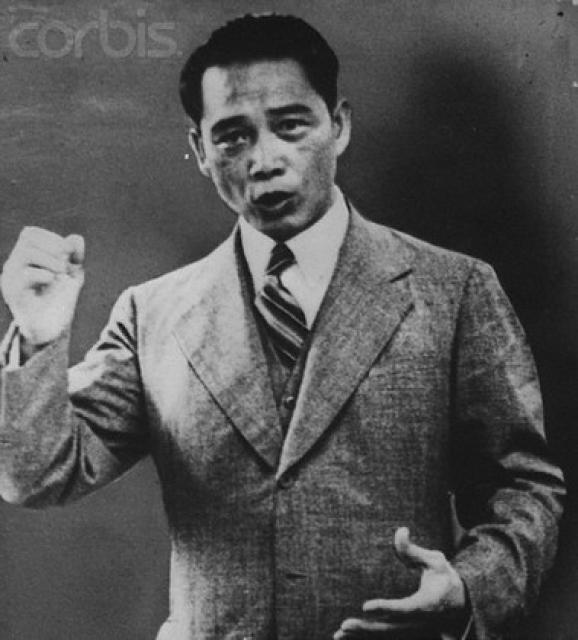
Wang Jingwei was born on May 4, 1883, in Sanshui County (now Foshan City), Guangdong Province, China. His parents, however, were natives of Zhejiang Province. In 1903, he went to Japan for studies and joined the Tōa Dōbunkai society led by Sun Yat-sen in 1905. In 1910, he was arrested for his involvement in political activities and sentenced to life imprisonment by the Qing Court. After the Xinhai Revolution, which overthrew the monarchy in China, he was released. He received education in France from 1912 to 1917 and then became Sun Yat-sen's personal assistant.
Political Career
After Sun Yat-sen's death, from June 1925 to March 1926, Wang Jingwei held the position of Chairman of the Kuomintang government in Guangzhou. He entered into conflict with Chiang Kai-shek and led the left wing of the Kuomintang. From April to August 1927, he was the Chairman of the Central Executive Committee of the Kuomintang and the head of the government in Wuhan. In June 1927, he carried out a coup d'état, establishing a personal dictatorship.
From 1930 to 1931, Wang Jingwei fought for power within the Kuomintang against Chiang Kai-shek. After reconciling with Chiang Kai-shek, from July 1931 to January 1932, he served as the Chairman of the Executive Yuan and the Minister of Foreign Affairs in the Kuomintang government in Nanjing. In January 1932, he became the Prime Minister.
On November 1, 1935, an assassination attempt was made on Wang Jingwei. He was seriously wounded and went to Europe for treatment. He returned to China in January 1937. From 1937 to 1938, he served as the Chairman of the Central Political Council of the Kuomintang. He led the pro-Japanese faction within the Kuomintang, advocating a pro-Japanese policy.
In December 1938, as the Deputy of Chiang Kai-shek in the Central Executive Committee of the Kuomintang, he fled from the temporary capital of China, Chongqing, and openly defected to the side of the Japanese invaders. On December 29 of the same year, he proposed negotiations with Japan, leading to the establishment of the central government of the Republic of China in Nanjing on March 30, 1940, under Wang Jingwei's leadership (largely under Japanese control), which was also called the "national government."
During the start of World War II, he constantly advocated for China to join the war on the side of Japan. In November 1942, Japan agreed to China's entry into the war. On December 20, 1942, Wang Jingwei arrived in Tokyo, where he met with Emperor Hirohito.
On January 9, 1943, he declared war on behalf of the Republic of China against Britain and the United States and issued a joint Japanese-Chinese declaration to fight the war to the end. In 1943, he succeeded in significantly easing the Japanese occupation regime and expanding the rights of his government. On October 20, 1943, a treaty on the Japanese-Chinese alliance was signed (later, in an additional protocol, Japan promised to withdraw its troops from Chinese territory after the end of the war).
In the second half of 1944, Wang Jingwei became seriously ill and was admitted to a clinic at Nagoya University, where he died on November 10, 1944. In China, Wang Jingwei is considered a traitor to his country. After China's liberation from Japanese occupation, Wang Jingwei's tomb in Nanjing was destroyed.


