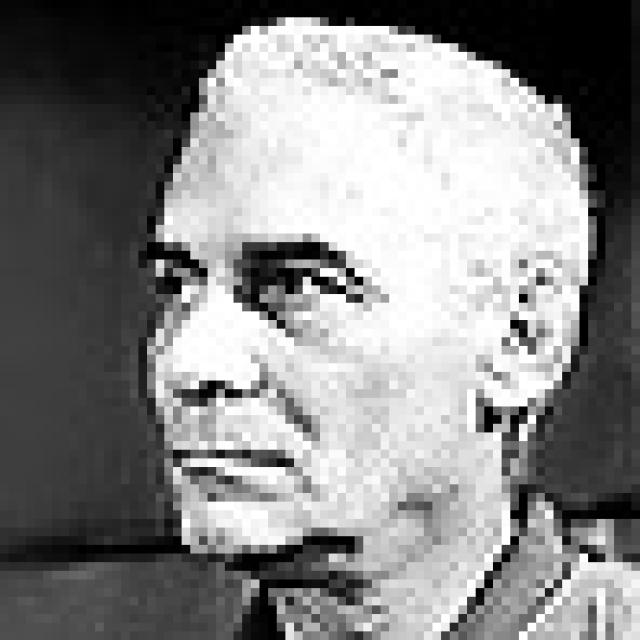
Gian Volonte
 Italy
Italy- Biography of Gian Maria Volonté
- Leading Actor of Italian Political Cinema
- Continued Socially-Oriented Works
- Director and Activist
Biography of Gian Maria Volonté
Gian Maria Volonté was born on April 9, 1933, in Italy, into a family of Milanese entrepreneurs. At the age of eighteen, he started working in a traveling theater troupe, where he served as a prop assistant, electrician, and actor. In 1957, he graduated from the National Academy of Dramatic Arts and began his acting career in theater in 1951. He made his film debut in 1960 and appeared in movies such as "Under Ten Flags" (1960) directed by Duilio Coletti, "Ride the Tiger" (1961) directed by Luigi Comencini, "The Girl with a Suitcase" (1961) directed by Valerio Zurlini, and "The Man Who Burned" (1962) directed by Paolo and Vittorio Taviani and Valentino Orsini. He played diverse roles in westerns like "A Fistful of Dollars" (1964) under the pseudonym John Wells and "Quien Sabe?" (1967) directed by Damiano Damiani, as well as in the mystical drama "The Witch's Love" (1966) directed by Damiano Damiani himself. It was evident from his early films that he was inclined towards socially oriented works, and his most notable roles from this period reinforced this tendency. These roles included "Seven Blood-Stained Orchids" (1968) directed by Gianni Puccini, "Bandits in Milan" (1968) and "The Mistress Grumiña" (1968) both directed by Carlo Lizzani, and "Wind from the East" (1969) directed jointly by Jean-Luc Godard, France, and West Berlin.
Leading Actor of Italian Political Cinema
From the 1970s onwards, Volonté became a leading actor of Italian political cinema, portraying a brilliant range of characters in films such as "Investigation of a Citizen Above Suspicion" (1970), "The Working Class Goes to Heaven" (1972), and "Todo Modo" (1976), all directed by Elio Petri. He also appeared in "Men Against" (1970), "The Mattei Affair" (1972), and "Lucky Luciano" (1973), all directed by Francesco Rosi. Other notable films included "Sacco and Vanzetti" (1971) and "Giordano Bruno" (1973), both directed by Giuliano Montaldo, "Slap the Monster on Page One" (1971) directed by Marco Bellocchio, "The Assassination" (1972) directed by Yves Boisset, "Suspicion" (1974) directed by Francesco Maselli, and "Marusia's Event" (1975, Mexico) directed by Miguel Littin. Volonté also played the lead role in the adaptation of Carlo Levi's anti-fascist book "Christ Stopped at Eboli" (1979) directed by Francesco Rosi.
Continued Socially-Oriented Works
Volonté continued to explore socially relevant themes in his later films, even after the decline of political cinema. He appeared in movies such as "I'm Afraid" (1977) directed by Damiano Damiani, "Operation Ogre" (1979) directed by Gillo Pontecorvo, "The Death of Mario Ricci" (1983, Switzerland) directed by Claude Goretta, "The Moro Affair" (1986) directed by Giuseppe Ferrara, and "Chronicle of a Death Foretold" (1986) directed by Francesco Rosi. He also delivered outstanding performances in films like "The Philosophers' Stone" (1988, Belgium) directed by André Delvaux, "Pestalozzi's Mountain" (1989, Switzerland-East Germany) directed by Peter von Gunten, "Open Doors" (1990) directed by Gianni Amelio, "A Simple Story" (1991) directed by Emidio Greco, and "Tirano Banderas" (1993, Spain, Cuba, Mexico) directed by José Luis García Sánchez. He remained unmatched in portraying the lead roles in the best adaptations of Leonardo Sciascia's books.
Director and Activist
In addition to his acting career, Volonté directed a 16mm documentary film titled "Tent on the Square" (1971) about Roman strikers. He actively participated in the struggle for the democratization of culture, particularly in theater and cinema. Gian Maria Volonté passed away on December 6, 1994.