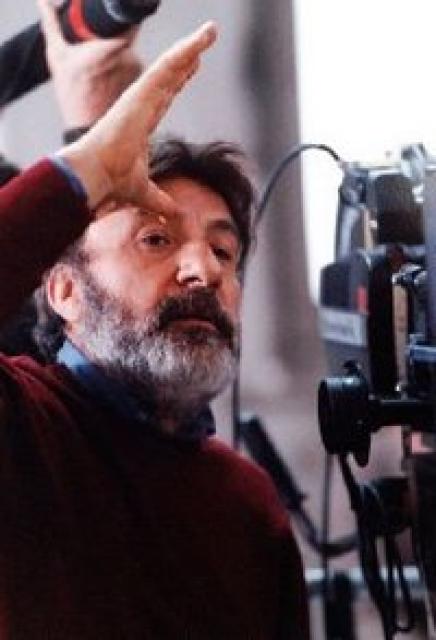
Gianni Amelio
 Italy
Italy- Gianni Amelio: Early Life and Beginnings
- Television and Experimental Cinema
- Feature Film Debut and Recognition
- Commercial Success and Critical Accolades
Gianni Amelio: Early Life and Beginnings
Gianni Amelio, an acclaimed Italian filmmaker, was born in 1945 in San Pietro a Magisano, Calabria. Shortly after his birth, his father emigrated to Argentina, leaving Amelio to be raised by his mother and grandmother. This absence of a father figure became a recurring theme in his cinematic works.
Amelio developed a passion for cinema while studying philosophy at the University of Messina. He attended film screenings and discussions, and wrote film criticism for the local magazine Giovane Critica.
Television and Experimental Cinema
In 1965, Amelio moved to Rome where he worked as a cameraman and assistant director on six films, collaborating with renowned filmmakers such as Gianni Puccini, Vittorio De Seta, and Liliana Cavani. Concurrently, he began his career in television in 1967, directing documentaries and assisting directors such as Ugo Gregoretti and Enrico Sanni. Amelio also actively participated in the Rome Experimental Cinema Center.
During the 1970s, Amelio directed several television films for RAI, which provided a platform for emerging directors. For the series "Sperimentali per la TV," he created La fine del gioco (1970), La città del sole (1973), and Bertolucci secondo il cinema (1976). Amelio also explored the thriller and giallo genres with Effetti speciali (1977) and La morte al lavoro (1979), respectively. His 1979 television film Il piccolo Archimede is considered a masterpiece. Amelio's final television work was I velieri (1983).
Feature Film Debut and Recognition
Amelio made his feature film debut in 1982 with Colpire al cuore, which delved into the topic of terrorism and father-son relationships. The film premiered at the Venice Film Festival and received critical and public acclaim.
In 1987, Amelio's reputation was cemented with the psychological drama I ragazzi di via Panisperna. Depicting the lives of a group of physicists in the 1930s, the film earned numerous awards, including the Best Screenplay award at the Bari Film Festival.
Amelio achieved international recognition with his 1989 film Porte aperte, based on the play by Leonardo Sciascia. It won four Felix Awards, two Silver Ribbon Awards, and four David di Donatello Awards, as well as being nominated for an Academy Award in 1991.
Commercial Success and Critical Accolades
Il ladro di bambini (1992) became Amelio's most commercially successful film. It earned him the Grand Prix at the Cannes Film Festival, another Felix Award, and five David di Donatello Awards, among others.
Throughout his career, Amelio has continued to explore themes of family, social injustice, and the complexities of human relationships. His films are known for their realism, emotional depth, and evocative cinematography.