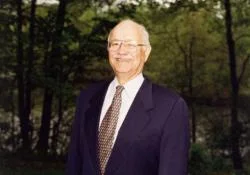
Gideon Sundback
Gideon Sundback (1880–1954) was a Swedish-born engineer whose redesign turned an unreliable fastening idea into the practical slide fastener now known as the zipper. Earlier inventors had patented related closures, but Sundback’s closely interlocking teeth, slider, and production methods made the device durable and commercially useful. His work eventually carried the humble fastener from shoes and military gear into everyday clothing, bags, and countless other products.
From Sweden to American industry
Born on April 24, 1880, in Småland, Sweden, Sundback studied engineering in Germany before emigrating to the United States in 1905. He first worked in the electrical industry, then joined the Universal Fastener Company in Hoboken, New Jersey, in 1906. The company was trying to improve an earlier “clasp locker” designed by American inventor Whitcomb Judson. Judson’s device could join two edges, but its hooks and eyes were prone to coming apart.
Sundback took on the problem as a design engineer. He increased the number of fastening elements along each inch, replacing the earlier large hooks with smaller, more numerous teeth arranged in opposing rows. A slider guided the rows together or pulled them apart. The result was a smoother and more secure closure that could be opened and shut repeatedly.
The modern fastener takes shape
Sundback’s most influential design, called the “Hookless No. 2,” was developed in the mid-1910s. His patent for a “separable fastener” was granted in 1917. He also devised machinery to produce the new interlocking elements efficiently, helping move the invention from a clever mechanism to a product that could be made at scale.
The fastener initially found a market in boots and tobacco pouches, where a reliable closure was especially useful. During World War I, the U.S. military used it on clothing and equipment. Its adoption by garment makers followed more gradually, as manufacturers and customers grew accustomed to a new alternative to buttons. In 1923, the B. F. Goodrich Company used the catchy word “zipper” for its rubber overshoes with the closure, and the name stuck.
A practical legacy
Sundback continued to patent improvements and work in the fastener industry, including with the Hookless Fastener Company in Meadville, Pennsylvania. His achievement was not inventing the general idea of a separable closure from scratch; it was making the design work reliably and creating a way to manufacture it. That distinction places him among the key innovators behind an object that became so common it is easy to overlook.
He died in Meadville on June 21, 1954, aged 74. In 2006, the National Inventors Hall of Fame recognized him for his role in developing the modern zipper. Today, the paired rows of teeth and sliding pull he perfected remain instantly recognizable on jackets, luggage, footwear, and everyday accessories around the world.