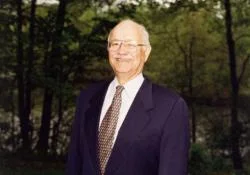
Jimmy Wales
- From Alabama to the early web
- Wikipedia takes off
- Beyond the encyclopedia
- A continuing role in free knowledge
Jimmy Wales helped turn a slow, expert-reviewed encyclopedia project into one of the internet’s most ambitious experiments in shared knowledge. Wikipedia’s open editing model made it possible for volunteers around the world to build and revise articles together. Its growth made Wales a public face of collaborative publishing, while also leaving him to navigate debates about accuracy, authority and who deserves credit for the project.
From Alabama to the early web
Born in Huntsville, Alabama, on 7 August 1966, Wales developed an early interest in reference books and computers. He studied finance and later worked in financial trading. In the mid-1990s he helped launch Bomis, an internet company whose revenue supported his next venture: a free online encyclopedia.
In 2000, Wales and philosopher Larry Sanger started Nupedia. Its goal was an encyclopedia written by experts and reviewed through a formal editorial process. That standard proved difficult to scale, so the project’s founders looked for a faster way to invite contributions. A wiki, a website that users can edit directly, offered a bold alternative.
Wikipedia takes off
Wales and Sanger launched Wikipedia on 15 January 2001. The new site was initially intended to support Nupedia, but its low barriers to participation quickly made it the more dynamic project. Volunteers could create and improve articles without waiting for a lengthy review process. Community rules, discussion pages and revision histories developed alongside the content, helping contributors resolve disputes and track changes.
The project expanded rapidly and became a multilingual reference work used by readers across the globe. Wales helped provide its early funding and became its best-known advocate. In 2003 he established the Wikimedia Foundation, a nonprofit organization that supports Wikipedia and other free-knowledge projects. Sanger’s contributions to Wikipedia’s early design and launch have also been widely recognized, though the two founders later differed over the site’s governance and the balance between open participation and expert editorial control.
Beyond the encyclopedia
Wales co-founded Wikia, later known as Fandom, in 2004, extending the wiki model to fan communities and other topics. He also pursued projects in journalism and social networking, including WikiTribune and WT.Social, which explored ways to share news and online discussion with less reliance on advertising-driven platforms.
His public role has included defending free access to information and speaking about the responsibilities that come with a major online platform. Wikipedia’s collaborative approach has made it a landmark of internet culture, but it also faces constant challenges: vandalism, uneven coverage, misinformation and contentious editorial debates. Wales has argued that transparent editing and community oversight can help address these problems, while critics continue to question how effectively those safeguards work.
A continuing role in free knowledge
Wales remains closely associated with the Wikimedia movement and serves on the Wikimedia Foundation’s Board of Trustees. He has received international recognition for Wikipedia’s influence, including a place on Time magazine’s list of the world’s most influential people in 2006.
His legacy is closely tied to an idea that once seemed impractical: that a free encyclopedia could be written and maintained by the public itself. Wikipedia’s scale and staying power made that idea part of everyday life. Wales’s role was not solitary; it grew from collaboration with Sanger, volunteer editors and the institutions built to sustain the work. Yet his entrepreneurial drive and public advocacy helped turn an online experiment into one of the world’s most widely used reference resources.