Giorgi Eliava
 Georgia
- Georgi Eliava: A Pioneer in Phage Therapy
- Early Life and Education
- Research and Collaboration
- Establishment of the Eliava Institute
- Legacy and Tragic End
Georgi Eliava: A Pioneer in Phage Therapy
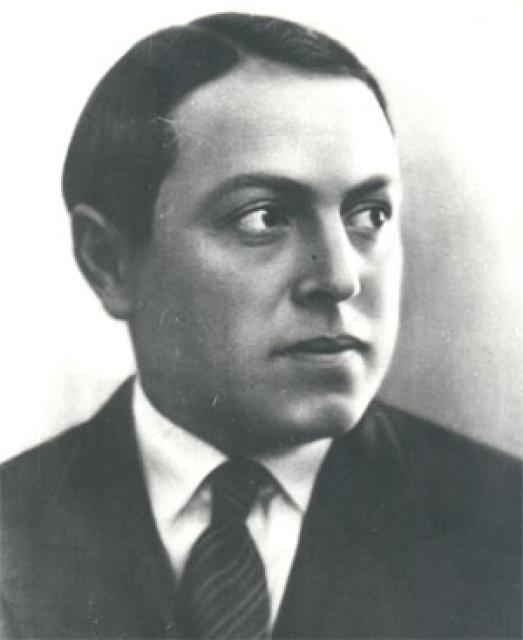
Georgi Grigorievich Eliava was a Georgian microbiologist and specialist in bacteriophages, and one of the founders of phage therapy. Even today, phage therapy finds application in the fight against certain unpleasant diseases, and in the first half of the 20th century, this technique was rightly considered one of the most promising. Georgi Eliava was regarded as the leading specialist in phage therapy and bacteriophages in the USSR.
Early Life and Education
Eliava was born in Sachkhere, Georgia. From 1909 to 1912, he studied medicine at Novorossiysk University, and later continued his research in Geneva. In Geneva, Georgi studied until 1914. In 1916, he successfully graduated from Moscow University and obtained a position as the head of the bacteriological laboratory in Trabzon. In 1917, Eliava became the head of the bacteriological laboratory in Tbilisi.
Research and Collaboration
From 1918 to 1921 and from 1926 to 1927, Georgi Eliava worked at the Pasteur Institute in Paris, where he met Felix d'Herelle, one of the co-discoverers of bacteriophages. The potential of bacteriophages as a medical treatment greatly fascinated Eliava, and he soon launched a project to study phage therapy techniques in his laboratory in Tbilisi, eventually attracting d'Herelle to join him.
Establishment of the Eliava Institute
In 1923, Georgi Eliava founded the Bacteriological Institute in Tbilisi, based on the laboratory he had been leading since 1921. This institute focused on the study and promotion of phage therapy. Further research revealed the promising nature of Eliava's chosen field. Bacteriophages had the advantage of selectivity, and in theory, phage therapy could be developed to target organisms that would not harm the carrier or other beneficial organisms in their body, such as the intestinal flora. Additionally, bacteriophages could multiply rapidly, allowing for the use of relatively small amounts of the original preparation.
Legacy and Tragic End
After Eliava's death in 1937, the institute was renamed in his honor in 1988. In 1926, the institute was granted 16 hectares of land on the right bank of the Kura River. Active research on bacteriophages and their use in fighting bacterial infections continued, as there were no other similar institutions in the country at that time. Prior to the widespread use of effective antibiotics, there was still much time left for the relevance of bacteriophage research.
From 1927 onwards, Georgi Eliava held the position of head of the Department of Hygiene at the Medical Faculty of Tbilisi, and from 1929, he led the Department of Microbiology. In 1934, the Tbilisi Plague Research Center was created under Eliava's initiative. However, in 1937, Georgi Eliava was arrested and executed as an "enemy of the people," along with his wife. According to legend, Eliava's arrest was not solely due to his belonging to the intellectual elite but also due to simple jealousy. Rumor has it that Georgi Eliava once showed interest in a woman who was also of interest to Lavrentiy Beria himself. According to the official version, the scientist was accused of attempting to organize an epidemic. Eliava was executed on July 10, 1937, at the age of 45.
Despite Eliava's tragic fate, phage therapy remained a promising field for a long time. The emergence of antibiotics reduced its popularity to some extent, but this approach is still being used against particularly dangerous and resistant bacteria to this day.