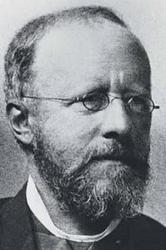
Charles Nicolle
 France
- Childhood and Education
- Medical Practice and Discovery in Rouen
- Breakthrough in Typhus Research
- Nobel Prize and Later Career
Childhood and Education
Charles Jules Henry Nicollewas born on September 21, 1866, in Rouen, France. His father, Judien Nicolas, was a doctor and professor of natural history. Despite his early literary aspirations, Nicolle pursued medicine like his father and elder brother Maurice, a renowned pathologist.
After studying in Rouen and Paris, Nicolle passed his medical internship exams in 1889. Encouraged by his brother, he joined the Pasteur Institute in Paris, where he trained under Émile Roux, a colleague of Louis Pasteur. In 1893, Nicolle earned his doctorate with a thesis on the role of the Ducrey bacillus in the development of soft chancre.
Medical Practice and Discovery in Rouen
Upon graduating, Nicolle returned to Rouen and worked at the municipal hospital as head of the bacteriology laboratory. He also lectured at the medical school, hoping to transform Rouen into a major medical research center. However, his bureaucratic challenges and progressive deafness hampered his progress, making him increasingly withdrawn.
Nicolle's frustration was alleviated when he was appointed director of the Pasteur Institute branch in Tunis, North Africa, in 1902. He converted the branch from a mere rabies vaccination unit into a hub of medical research and vaccine development. The Pasteur Institute of Tunis became a leading laboratory for studying tropical diseases under Nicolle's leadership.
Breakthrough in Typhus Research
In Tunis, Nicolle delved into the study of typhus, a devastating disease that had plagued armies and urban populations for centuries. He observed that typhus patients infected family members, personal physicians, and hospital staff upon admission to the hospital but not after entering the wards.
Nicolle hypothesized that clothing and skin carried the infectious agent and that soap and water could remove it. Suspecting the body louse, he infected chimpanzees and guinea pigs with typhus using the louse as a vector. His experiments proved that body lice were responsible for transmitting typhus.
This discovery had profound implications for disease control. By implementing delousing measures, the population of Tunis was rid of typhus within three years. During World War I, armies implemented delousing procedures, significantly reducing typhus casualties among French, German, and British troops.
Nobel Prize and Later Career
Nicolle's discovery earned him the Nobel Prize in Physiology or Medicine in 1928. Despite the lack of novel principles in his work, his practical impact in controlling typhus swayed the Nobel Committee. In his Nobel Lecture, Nicolle emphasized the importance of "invisible" infection, where individuals carry pathogens without symptoms but remain infectious.
In 1932, Nicolle was appointed to the prestigious position of head of the Department of Experimental Medicine at the Collège de France, where he lectured for three years. He shared his insights on scientific research, medicine, and human destinies, inspiring many French scientists.
Nicolle passed away in Tunis on November 3, 1936, while serving as director of the Pasteur Institute. Throughout his career, he remained not only a distinguished bacteriologist and immunologist but also a poet, philosopher, and philologist.