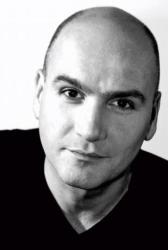
Giorgio Ronconi
 Italy
ItalyBiography of Giorgio Ronconi
Giorgio Ronconi was an Italian opera singer (baritone) and music educator. He was renowned for his brilliant acting abilities and convincing performances on stage. Born on August 6, 1810, in Milan, Italy, Giorgio Ronconi received vocal training from his father, the leading tenor Domenico Ronconi. His brother, Felice Ronconi, was also a singer.
Operatic Career
Giorgio Ronconi made his operatic debut in Pavia in 1831, performing the role of Waldburg in Bellini's "La straniera." He continued to sing at La Scala and other Italian venues. Between 1830 and 1840, Ronconi was the first to perform in seven of Donizetti's operas. He played Cardenio in "Il furioso all'isola di San Domingo" in 1833, and took on leading roles in "Torquato Tasso" and "Il campanello" in 1836 and 1837, respectively. In 1838, he portrayed Corrado Waldorf in "Maria de Rudenz," and in 1841, he played Don Pedro in "Maria Padilla." Ronconi's notable performances also included the role of Enrico in "Maria di Rohan" in 1843.
Marriage and International Success
Giorgio Ronconi married the soprano Elguerra Giannoni on October 8, 1837, in Naples, Italy. While Giannoni had moderate success as a concert singer and performed at London's Lyceum and King's Theatre, she faced numerous failures on the operatic stage. Despite her limited success, Ronconi's popularity and demand from Italian companies often led to her inclusion in productions.
In 1842, Ronconi performed at Her Majesty's Theatre in London, portraying the role of Henry Ashton in Donizetti's tragic opera "Lucia di Lammermoor." This marked the beginning of his rapid international success, establishing him as the most popular and influential opera singer in Europe in the early 1870s before his retirement. Ronconi performed at London's Royal Opera House and Covent Garden from 1847 to 1866. He also showcased his talent in Vienna in 1843, St. Petersburg from 1850 to 1860, and New York City from 1866 to 1872.
Despite his vocal limitations, Giorgio Ronconi compensated for them with his remarkable artistic skills and mastery on stage. He excelled in both comedic and tragic roles, and his most memorable characters were Rigoletto from Verdi's opera of the same name and Figaro from Rossini's "Il Barbiere di Siviglia," which truly showcased his talent.
Later Years and Legacy
In his later years, Ronconi founded a singing school in Granada, Spain, and accepted a professorship at the Madrid Royal Conservatory. He played a crucial role in inspiring a generation of great Italian opera singers with baritone voices. Some of the most notable singers influenced by him or considered his contemporaries include Felice Varesi, Leone Giraldoni, Francesco Graziani, and Antonio Cotogni.
Giorgio Ronconi's impact was so significant that Sir Charles Santley, a renowned 19th-century baritone, wrote in his memoirs about Ronconi's powerful use of the word "libertà" (freedom) during a performance. This caused great civil unrest, leading to a reprimand and the directive to replace the word with "lealtà" (loyalty) in future performances.
Giorgio Ronconi passed away on January 8, 1890, in Madrid at the age of 79. His legacy as a talented baritone and influential figure in the opera world continues to resonate to this day.