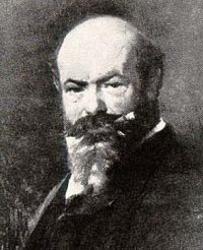
Giovanni Battista Piazzetta
 Italy
Italy- Biography of Giovanni Battista Piazzetta
- Early Works and Dramatic Contrast
- Altarpiece and Decorative Painting
- Genre Compositions and Later Works
Biography of Giovanni Battista Piazzetta
Giovanni Battista Piazzetta was an Italian painter from Venice. He was born on February 13, 1683, in Venice. Piazzetta studied under Giuseppe Crespi in Bologna, whose influence played a decisive role in shaping his style. While working in Crespi's workshop, Piazzetta began to paint in a free impressionistic manner. Upon returning to his hometown, he was influenced by the Venetian tradition, which is evident in his use of very soft and delicate tones to create chiaroscuro modeling. This tendency is well observed in his portrait of Giulia Lama (c. 1723, Madrid, Thyssen-Bornemisza Museum), which became an important element in the further development of Venetian painting in the 18th century.
Early Works and Dramatic Contrast
Piazzetta's early works are characterized by sharp chiaroscuro contrasts and the predominance of reddish-brown tones. Through strong chiaroscuro modeling, the artist aimed to achieve dramatic tension and relief. Examples of this can be seen in his paintings "The Martyrdom of St. James" (1722, Venice, Church of San Stae) and "The Sacrifice of Isaac" (1735-1741, Vadodara, Museum and Picture Gallery). Piazzetta's decisive naturalism is reminiscent of the art of Caravaggio and Guercino. Later in his career, the artist moved away from sharp contrasts and adopted a richer modulation of color and light.
Altarpiece and Decorative Painting
One of Piazzetta's best works is the altarpiece "The Apparition of the Madonna to St. Philip Neri" (1725-1727, Venice, Church of Santa Maria della Fava). The figures in this painting acquire specificity and reality through the density of colors and the dramatic use of light. From 1723 to 1727, Piazzetta created a monumental composition for the ceiling of the chapel of St. Dominic in the Venetian church of San Zanipolo - "The Apotheosis of St. Dominic." In this composition, the aerial perspective and energetic movements of the figures anticipate the techniques of the greatest master of decorative painting, Giovanni Battista Tiepolo.
Genre Compositions and Later Works
Like Crespi, Piazzetta also painted genre compositions, such as "The Pastoral" (1740, Chicago, Art Institute) and "Idyll on the Seashore" (1745, Cologne). Over time, the color palette of Piazzetta's works became lighter and richer, and their mood became more serene and contemplative, as seen in his paintings "Rebecca and Eleazar" (1735-1741, Milan, Brera Gallery) and "The Fortune Teller" (1740, Venice, Academy Gallery). In 1750, Piazzetta was elected director of the Venetian Academy of Fine Arts. He passed away in Venice on April 28, 1754.