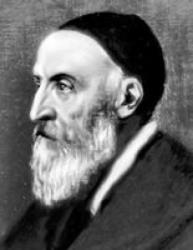
Juan Sanchez Cotan
 Spain
SpainBiography of Juan Sánchez Cotán
Juan Sánchez Cotán, a Spanish painter, was born in 1561. He studied painting in Toledo under the artist Blas del Prado, known for his still lifes. Sánchez Cotán lived in Toledo until 1603 and then moved to Granada in 1604, where he became a Carthusian monk. He also made a trip to Madrid.
His most active period of artistic activity was between 1615 and 1617, during which he created paintings dedicated to the history of the Carthusian order and its renowned figures for the Carthusian monastery in Granada. The religious compositions in his artistic legacy followed the archaizing tradition of the late mannerist masters of the Escorial but were also marked by a simple and naïve piety (such as Madonna and Child, The Immaculate Conception), making them of secondary importance.
Sánchez Cotán is best known for being the creator of a special type of Spanish still life called "bodegón" (meaning "tavern" or "food shop" in Spanish), which also included figures of traders, cooks, and breakfast scenes. His paintings in the genre of still life, created in the early 17th century, are only known by a few examples. These paintings featured a small group of isolated tangible objects, sometimes suspended by thin ropes and seemingly pushed forward by the black void of a window. The sharp contrasts of light and shadow, as well as the bold color patches, testify to the influence of Caravaggio's style.
The bright national originality of the Spanish master is embodied in the emphasized simplicity of the represented everyday objects (mostly vegetables and fruits such as quince, cabbage, melon, cucumber, lemon branch, pumpkin, a handful of carrots, and a bunch of game), as well as in the ascetic severity of the visual structure. The principle of monotonous and seemingly elementary juxtaposition coexists with a precise sense of plastic form, equilibrium, rhythm, and well-thought-out composition. Each object is fully real and even prosaic, yet it is also heroized and monumental. This is why Sánchez Cotán's still lifes create the impression of a certain artistic hyperbole.
The "bodegón" type, created by Sánchez Cotán, further developed in the works of Surbarán, Velázquez, and other Spanish painters of the 17th century. The artist passed away in 1627.