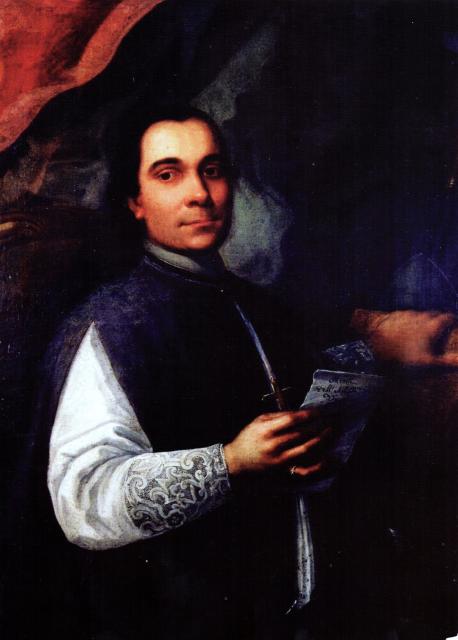
Giovanni Battista Vaccarini
 Italy
Italy- Early Life and Training
- Architectural Influences
- Legacy in Catania
- Ecclesiastical Masterpieces
- Beyond Sicily
- Death and Legacy
Early Life and Training
Giovanni Battista Vaccarini, a Sicilian architect, was born in Palermo. His passion for architecture led him to study in Rome in the 1720s under the patronage of Cardinal Pietro Ottoboni.
Architectural Influences
Vaccarini found inspiration in the works of Baroque masters Borromini and Bernini. His early designs in Sicily reflected the influence of architects like Alessandro Specchi, Francesco de Sanctis, and Filippo Raguzzini, who favored ornate and exuberant styles over classicism.
Legacy in Catania
Vaccarini's contributions to the cityscape of Catania are particularly notable in the Piazza del Duomo. The central fountain, designed by Vaccarini, comprises an elephant bearing an Egyptian obelisk surmounted by a cross, becoming one of Catania's iconic landmarks.
Ecclesiastical Masterpieces
Vaccarini played a pivotal role in constructing and renovating churches throughout the province of Catania. His masterpiece, the facade of Catania Cathedral, exhibits similarities to Roman ecclesiastical architecture, including influences from Sant'Agnese in Agone in Rome.
Beyond Sicily
Vaccarini's work extended beyond Sicily. In 1756, he collaborated on the construction of the Royal Palace in Caserta, Italy, alongside Luigi Vanvitelli and Ferdinando Fuga.
Death and Legacy
Giovanni Battista Vaccarini passed away in Palermo in 1768. His legacy as a master of Sicilian Baroque architecture lives on through his numerous works, which continue to captivate visitors to Sicily.





