Giovanni Cassini
 Italy
Italy- Biography of Giovanni Cassini
- Early Career and Transition to Astronomy
- Scientific Achievements
- Director of the Paris Observatory
- Legacy and Later Life
Biography of Giovanni Cassini
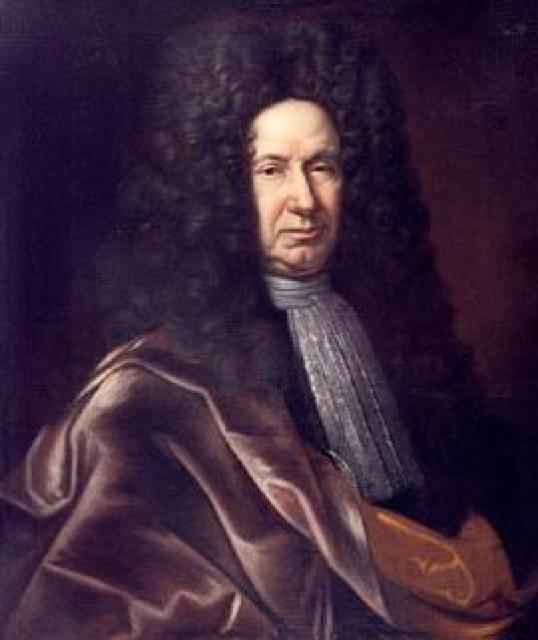
Giovanni Domenico Cassini (Cassini I) was born on June 8, 1625, in the small Italian town of Perinaldo, in the Genoese Republic. He received his education at the Jesuit college in Genoa and at the Abbey of San Fruttuoso. From 1644 to 1650, Cassini worked at the observatory of Marquis Malvasia in Pianzano, near Bologna, where he continued his astronomical education under the guidance of Giuseppe Biancani and Francesco Maria Grimaldi.
Early Career and Transition to Astronomy
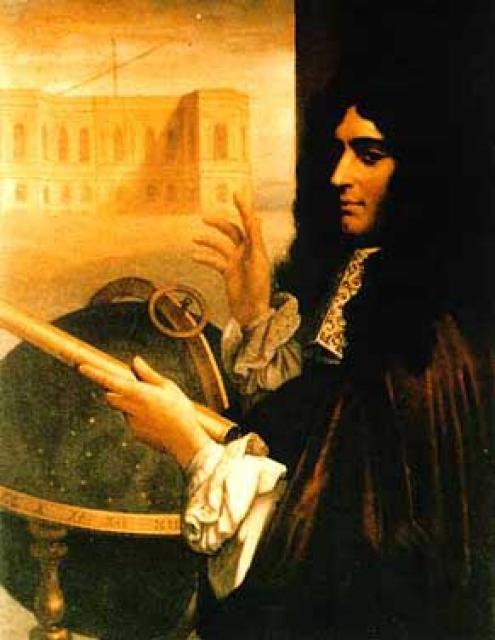
Cassini's career is a remarkable example of the changing attitude of the scientific community towards astrology in the 17th and 18th centuries. In his youth, Cassini was deeply interested in astrological theories, which eventually led him to pursue astronomy. His reputation as an astrologer played a crucial role in starting his scientific career. The Marquis Cornelio Malvasia, a wealthy amateur astronomer and senator of Bologna, invited Cassini to work at his observatory in Pianzano. It was during his time at this observatory that Cassini constructed his first astronomical instruments and conducted his first scientific observations. Over time, his interest in astrology diminished, and after his departure to France in 1669, there are no records of his involvement in astrology.
Scientific Achievements
Cassini's main scientific contributions were in the field of observational astronomy and geodesy. In 1650, he became a professor of mathematics and astronomy at the University of Bologna, a position he held until 1669. He made numerous positional observations of the Sun using a meridian instrument and compiled new solar tables based on these observations, which were published in 1662. He also played a significant role in the establishment of the Paris meridian and the creation of the famous Cassini map of France.
Cassini made groundbreaking observations of the surfaces of planets, including Jupiter and Mars. By observing the movement of shadows from Jupiter's moons across the planet's disk and sketching the cloud patterns on its surface, he accurately determined Jupiter's rotation period. He also described the planet's banding system and measured its oblateness. Cassini's observations of Mars allowed him to precisely determine its axial rotation period and describe its surface features.
In 1668, Cassini developed a theory and compiled tables of Jupiter's moon movements. These tables were invaluable for sailors at that time, as they allowed them to determine their ship's geographic longitude based on the observed positions of Jupiter's moons. Cassini's observations also led to the discovery of the finite speed of light by the Danish astronomer Ole Rømer in 1675.
Cassini's work extended beyond planetary observations. He conducted detailed observations of the Moon, resulting in the creation of a large lunar map in 1679. He also provided the first scientific description of the zodiacal light, correctly attributing it to a cosmic phenomenon rather than a meteorological one. Cassini's measurements of the solar parallax and his empirical laws describing the motion of the Moon (known as Cassini's laws) were significant contributions to astronomy.
Director of the Paris Observatory
In 1669, Cassini was elected a member of the French Academy of Sciences, and the following year, on the recommendation of Jean Picard, he was invited by King Louis XIV to become the director of the newly constructed Paris Observatory. From this point on, France became his second home until the end of his life.
In Paris, Cassini devoted himself entirely to astronomy. With the generous support of Louis XIV, he built a large refracting telescope with a superb lens made by Campani. The telescope was mounted on a tall wooden structure resembling a tower, and the observer had to control it using ropes. Despite the inconvenience, Cassini's discoveries and scientific work continued uninterrupted.
Cassini made several significant discoveries related to Saturn. He discovered the second, third, fourth, and fifth moons of Saturn (Iapetus, Rhea, Tethys, and Dione) and explained the variations in brightness of Iapetus due to its synchronous rotation. He also observed and described the division in Saturn's rings, now known as the "Cassini Division." His hypothesis that the rings were composed of numerous small particles was later confirmed.
Cassini's contributions to geodesy included leading expeditions to measure the length of a meridian arc in France. Based on these measurements, he incorrectly concluded that the length of one degree of the geographic meridian decreased towards the north, suggesting an elongated shape of the Earth. However, subsequent expeditions by Pierre Bouguer, Louis Godin, and Charles Marie de La Condamine in Peru and Pierre Louis Maupertuis in Lapland resolved the question and confirmed that the Earth is an oblate spheroid, as proposed by Isaac Newton.
Legacy and Later Life
Giovanni Cassini passed away on September 14, 1712, in Paris at the age of 87. Despite losing his sight, he remained highly respected and revered. Cassini's name is associated with various astronomical features, including craters on the Moon and Mars, the Cassini Oval, the Cassini Division in Saturn's rings, and the Cassinian curve. His observations and discoveries paved the way for future advancements in astronomy and contributed to our understanding of the solar system.
Throughout his life, Cassini was not only a dedicated scientist but also a romantic. He dedicated his works, observations, and even tables to various individuals and presented them as gifts. His autographed observation diaries of the 1656 comet were given to Queen Christina of Sweden, who was living in exile in Italy at the time.
Cassini's numerous writings were published in the editions of the French Academy of Sciences and the "Journal des Savants." Some of his notable works include "Observationes cometae anni 1652 usque 1653," "Ephemerides Bononienses Mediceorum siderum," and "Opera astronomica." His autobiography, titled "Memoires pour servir a l'histoire des sciences," was also published.
Giovanni Cassini's contributions to astronomy and his dedication to science continue to inspire future generations of astronomers and scientists.