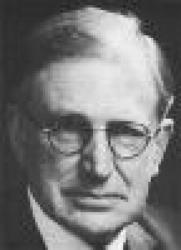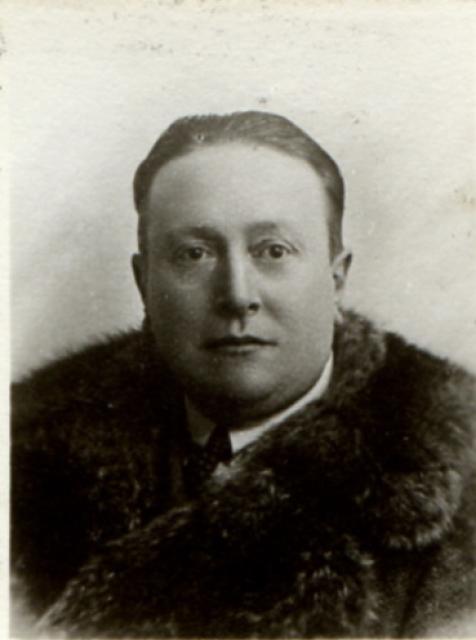
Giuseppe Zamboni
 Italy
ItalyBiography of Giuseppe Zamboni
Giuseppe Zamboni was an Italian priest and physicist known for his invention of the Zamboni (dry) pile, an "electrostatic battery" that was one of the earliest devices used to generate electricity. He was a member of the Venetian Institute. Giuseppe Zamboni was born on June 1, 1776, in Northern Italy. While some sources state that Venice was his hometown, others claim it was Verona.
After completing his studies at the seminary in Verona, Zamboni was appointed to the physics department at a school in Verona. He began to improve the dry cell battery, an electric battery that did not use an electrolyte. His invention was ready by around 1812. It consisted of several paper/flannel disks coated with zinc foil on one side and manganese dioxide on the other. Dry paper containing hygroscopic water served as the conductor. These disks were stacked in large quantities in a glass tube (a galvanic column) similar to Volta's pile. The electromotive force was sufficient to create a weak and long-lasting source of electricity.
Zamboni also placed a light copper ball between two dry columns - one with a positive terminal and the other with a negative terminal. This design was called "electrostatic clocks" because the oscillating ball resembled a pendulum. However, these clocks were unreliable for timekeeping due to their strong dependence on weather conditions and room temperature.
In 1840, during an experiment with the so-called Oxford Electric Bell at the Clarendon Laboratory, Oxford University, two high-voltage galvanic batteries were used. In other words, Zamboni's columns were used in the experiment, which differed from Volta's piles in terms of low current and longer operating time. Brass bell-shaped cups were placed under the batteries, and a 4mm ball oscillated between them on a thread. The ball struck the cups at a frequency of 2 Hz. The powerful electrostatic field generated by the batteries set the ball in motion. Over 170 years have passed since the start of the Oxford Electric Bell experiment, and the ball continues to strike the cups. While it is not an eternal engine, the Oxford Electric Bell vividly demonstrates the longevity of an electrostatic device operating at high voltages and low currents.
Giuseppe authored works such as "Della pila elettrica a secco" on the dry battery, "L'elettromotore perpetuo" on "perpetual" electricity, and "Descrizione d'un nuovo galvanometro" which described a new galvanometer. He passed away in Venice on July 25, 1846.