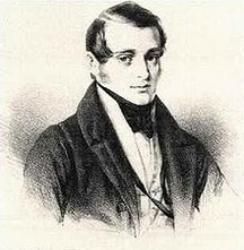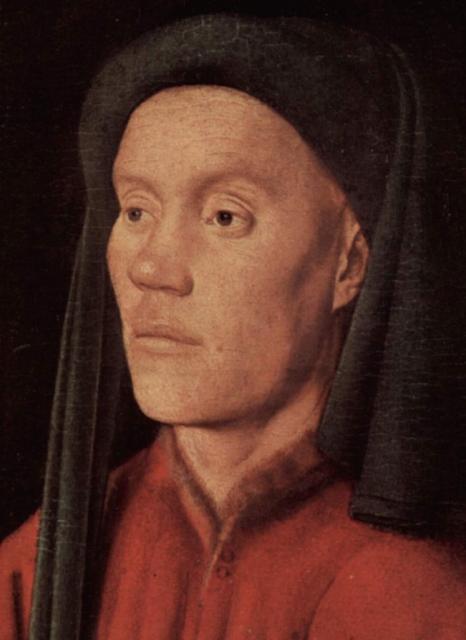
Giyom Dufay
 Netherlands
Biography of Guillaume Dufay
Guillaume Dufay was a Flemish composer and music theorist, and the founder of the Netherlandish school. He was born near Brussels, Belgium, and was the illegitimate child of an unknown priest and a woman named Marie Du Fayt. After his birth, Marie moved to Cambrai and Dufay was raised there by a relative who was a canon in the city's cathedral.
Dufay received his musical education in the cathedral, and his teachers included Richard Loqueville and Nicolas Grenon. He served as a chaplain in Sen-Jeri and later traveled to the Council of Constance in 1414. He returned to Cambrai in 1418 and served as an assistant priest in the cathedral. In 1420, he left Cambrai and traveled to Italy, where he served at the court of Malatesta in Rimini and Pesaro. During this time, he composed motets, ballads, and sacred works for family celebrations.
In 1424, Dufay returned to Cambrai, but in 1426, he went to Bologna, where he served as an assistant priest and later became a priest. In Bologna, he composed the joyful French rondeau "Adieu ces bons vins de Lannoys" in 1426. In 1428, he moved to Rome and joined the papal chapel, serving under Pope Martin V and later Pope Eugene IV. During this time, Dufay composed many works for papal ceremonies and city celebrations.
In 1434, Dufay was invited to lead the chapel of Amadeus VIII, Duke of Savoy. He returned to the papal chapel in Florence in 1435 and in 1436, he composed one of his most famous motets, "Nuper rosarum flores," for the consecration of the new Florence Cathedral. During this time, Dufay also developed a close relationship with the d'Este family in Ferrara, who were patrons of the arts. He composed at least one ballad for the Marquis of Ferrara, Niccolo III.
In 1437, Dufay completed his service in the papal chapel and was granted a canonicate in Cambrai. He studied law at the University of Turin and received a degree in 1437. During this time, he had close connections with the court of Duke Ludwig of Savoy and held the honorary title of "maestro di cappella." However, the conflict between the papacy and the Council of Basel threatened his position, and Dufay returned to Cambrai in 1439.
Dufay remained in Cambrai during the 1440s and collaborated with Nicolas Grenon on the revision of the liturgical repertory in the cathedral. In 1445, his mother passed away, and he moved into the house of a former canon, which became his main residence. In 1446, he received a canonicate in Mons in addition to his position in Cambrai.
After the abdication of the antipope Felix V in 1449, the tensions in the church began to ease, and Dufay left Cambrai and traveled south. He arrived in Turin in 1450, but later returned to Cambrai in the same year. In 1452, he traveled to Savoy and did not return to Cambrai for six years. During this time, he attempted to find a position or benefice that would allow him to stay in Italy.
Dufay's musical legacy includes a wide range of vocal genres, including masses, motets, magnificats, hymns, songs, and antiphons. He composed 11 isorhythmic motets, 8 non-isorhythmic motets, and 9 complete masses, among many other works. He is known for his innovative use of cantus firmus and his development of polyphonic techniques. Dufay's music was widely copied, distributed, and performed throughout Europe.
Dufay died on November 27, 1474, and was buried in the chapel of Saint Etienne in the Cambrai Cathedral. His tombstone with his portrait was rediscovered in 1859 and is now displayed in a museum in Lille. Dufay's compositions had a significant impact on the development of polyphonic music, and many composers of the following generations were influenced by his style.