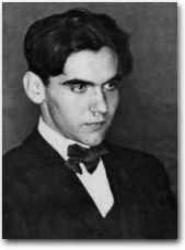
Gottfried Benn
 Germany
- Gottfried Benn: An Expressionist Icon and Critic of Nazism
- Rise to Fame as an Expressionist Poet
- Ambivalence Towards Nazism
- Conflict with the SS and Literary Censorship
- World War II and Post-War Suppression
- Death and Legacy
Gottfried Benn: An Expressionist Icon and Critic of Nazism
Early Life and EducationGottfried Benn, a German essayist, novelist, and Expressionist poet, was born in Putlitz on May 2, 1886, to a Lutheran pastor. Before pursuing theology at the University of Marburg and medicine at Berlin's Military Medical Academy, he attended schools in Sellin and Frankfurt an der Oder.
Rise to Fame as an Expressionist Poet
Benn rose to prominence as an Expressionist poet before World War I, publishing a controversial collection of poems entitled "Morgue" in 1912, which depicted the physical decay of corpses and was condemned by moralists. He was drafted into the army in 1914 and briefly served as a military physician on the Belgian front. After the war, his poetry was included in the seminal Expressionist anthology "Menschheitsdämmerung" (Humanity's Twilight) in 1919.
Ambivalence Towards Nazism
Benn held a complicated attitude towards the Nazi movement. Initially sympathetic to National Socialism as a possible savior for humanity, he soon recognized its absurdity and began contributing anti-Nazi articles to German newspapers, earning him a publication ban. He was appointed to the poetry section of the Prussian Academy in 1932 and became its head in February 1933. However, he disappointed the Nazis and was expelled from the academy in June of that year.
Conflict with the SS and Literary Censorship
Shaken by the "Night of the Long Knives," Benn renounced Nazi ideology. In May 1936, the SS journal "Das Schwarze Korps" denounced his Expressionist and experimental poetry as degenerate, Jewish, and homosexual. In 1937, SS member Wolfgang Willrich mocked Benn in his book "Säkuberung des Kunsttempels," but Heinrich Himmler rebuked Willrich and supported Benn due to his good standing from 1933 onward. Despite this, Benn was banned from writing in 1938 by the Reichsschrifttumskammer (National Socialist Association of Authors).
World War II and Post-War Suppression
During World War II, Benn served in garrisons in Eastern Germany, where he continued writing poetry and essays. After the war, his work was banned by the Allied forces due to his initial support of Hitler. He was awarded the Georg Büchner Prize in 1951. Benn praised Julius Evola's "Revolt Against the Modern World."
Death and Legacy
Gottfried Benn died of bone cancer in West Berlin on July 7, 1956. He is buried in the Waldfriedhof cemetery in Dahlem. Despite his significant contributions to 20th-century poetry, Benn remains a relatively obscure figure, perhaps a consequence of the moral outrage his early works provoked.