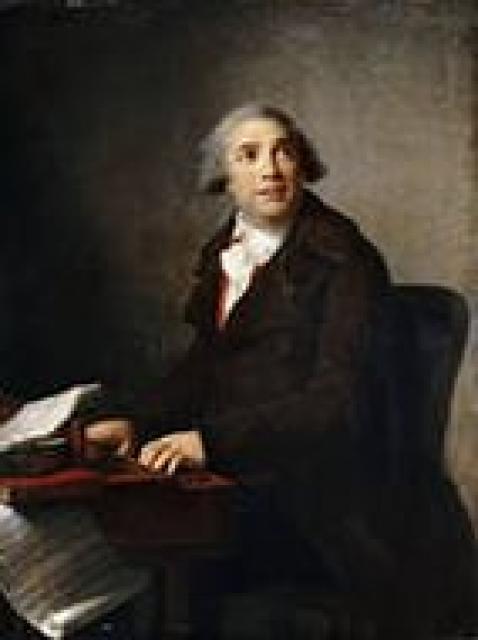
Dgovanny Paisiello
 Italy
Italy- Giovanni Paisiello: A Musical Legacy
- Comic Opera Success
- Imperial Invitations
- Vienna and Republican Naples
- Napoleon's Empire
- Later Years and Legacy
Giovanni Paisiello: A Musical Legacy
Early Life and EducationBorn on May 8, 1740, in Taranto, Sicily, Giovanni Paisiello's musical talent was recognized early on. His Jesuit teacher recommended that he be sent to the Conservatory of Sant'Onofrio in Naples, where he studied for nine years (1754-1763).
Comic Opera Success
Known for his lively humor and self-deprecation, Paisiello excelled in composing comic operas. His works delighted audiences in major Italian cities, establishing him as a leading figure in the Neapolitan operatic tradition.
Imperial Invitations
In 1776, Paisiello received an invitation from Empress Catherine II of Russia. During his time at the Russian court (1776-1784), he wrote the celebrated opera "The Barber of Seville" ("Il Barbiere di Siviglia"), which was performed during a visit by American Revolutionary War hero John Paul Jones. Jones urged Paisiello to compose a revolutionary anthem for the United States, but the composer declined, stating that America's need for laws outweighed that for a national anthem.
Vienna and Republican Naples
After leaving Russia, Paisiello worked in Vienna, where he wrote 12 symphonies for Emperor Joseph II and the opera "King Theodore in Venice" ("Il re Teodoro in Venezia"). Upon his return to Naples during the republican period, he was honored by the new government and became Director of Music of the Neapolitan Republic.
Napoleon's Empire
After the restoration of the monarchy, Paisiello lost his post but was sought after by Napoleon, who appointed him as Director of the Imperial Chapel. In France, he enjoyed generous compensation and composed numerous operas, including one based on a French libretto ("Proserpine"). However, it proved unsuccessful, leading to Paisiello's decline and his request to leave for Naples due to his wife's illness.
Later Years and Legacy
Paisiello returned to Naples in 1803 and lived out his life comfortably, receiving pensions from various monarchs he had served. He passed away on June 5, 1816, leaving behind a rich musical legacy marked by his skillful and humorous compositions.