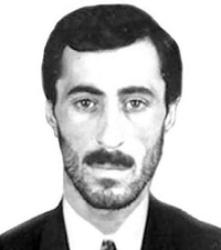
Graham Greene
 Great Britain
Biography of Graham Greene
Graham Greene was an English writer known for his novels that combined detective plots with religious undertones. He was born on October 2, 1904 in Berkhamsted, Hertfordshire. He attended Berkhamsted School, where his father was the headmaster, and later studied at Balliol College, Oxford University. During this time, he also started working for a tobacco company in the hopes of being sent to China. He briefly worked for a local weekly publication before finding spiritual solace at the age of 21 when he converted to Catholicism. In 1927, he married Vivien Dayrell-Browning. From 1926 to 1930, he served in the letters department of The Times newspaper in London.
Early Writing Career
Greene left journalism after the success of his first novel, "The Man Within" in 1929. In 1932, he published the political thriller "Stamboul Train", which was followed by several other books with detective elements such as "A Gun for Sale" (1936), "The Confidential Agent" (1939), and "Ministry of Fear" (1943). He referred to these books as "entertainments". His novels "It's a Battlefield" (1934) and "England Made Me" (1935) reflected the social and political turmoil of the 1930s. "Brighton Rock" (1938) was the first of his "entertainment" novels to incorporate religious themes. In the late 1930s, Greene traveled extensively in Liberia and Mexico, which inspired his books "Journey Without Maps" (1936) and "The Lawless Roads" (1939).
Later Career
Inspired by the persecution of the Catholic Church in Mexico, Greene wrote "The Power and the Glory" (1940), a novel about a sinful "whiskey priest" who defies the church's oppressors. From 1941 to 1944, Greene worked for the British Ministry of Information in West Africa, which provided material for his novel "The Heart of the Matter" (1948). His next significant work, "The End of the Affair" (1951), was set in London during the German bombings of World War II. In his later works, Greene infused a sense of relevancy that he likely gained during his time as a correspondent in Indochina for The New Republic magazine. His novels were often set in exotic countries on the brink of international conflicts, such as "The Quiet American" (1955), set in Southeast Asia before the American invasion, "Our Man in Havana" (1958), set in Cuba before the revolution, and "The Comedians" (1966), set in Haiti during the rule of François Duvalier. In his later works, religion took a backseat and its authority became less unquestionable. For example, the ending of "A Burnt-out Case" (1961) hints at the inability of Christianity to help modern man.
Other Works
In addition to his novels, Greene wrote plays such as "The Living Room" (1953), "The Potting Shed" (1957), and "The Complaisant Lover" (1959). He also published several collections of short stories, including "Twenty-one Stories" (1954), "A Sense of Reality" (1963), and "May We Borrow Your Husband?" (1967). His collections of essays include "The Lost Childhood" (1951), "Collected Essays" (1969), and his biography "Lord Rochester's Monkey" (1974). Many of his works have been adapted into films, including "The Third Man" (1950), for which he also wrote the screenplay. Greene passed away on April 3, 1991 in Vevey, Switzerland.