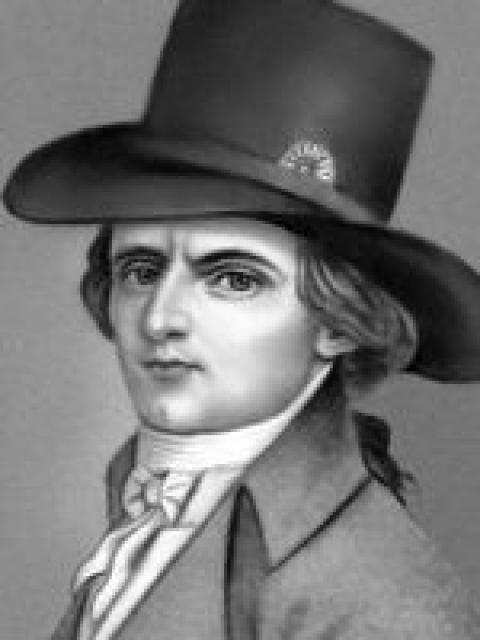
Grakh Babeuf
 France
- François Noël Babeuf: Early Life and Education
- Revolutionary Activism
- Political Thought and Ideals
- The Babeuvist Movement
- Arrest, Trial, and Execution
- Legacy and Significance
François Noël Babeuf: Early Life and Education
Born on November 23, 1760, in Saint-Quentin, France, François Noël Babeuf came from a humble family with a military background. As a young man, he became a feudal archivist and lawyer, immersing himself in the writings of Rousseau, Mably, and Morelly. These thinkers ignited in Babeuf a fervent passion for social equality and a deep disdain for the feudal system.
Revolutionary Activism
In the years leading up to the French Revolution, Babeuf's political consciousness blossomed. He actively participated in revolutionary events in Picardy, advocating for the abolition of indirect taxes and the redistribution of land. His principled opposition to monarchy led him to support the establishment of a republic in 1791.
Political Thought and Ideals
Babeuf envisioned a society based on "perfect equality," free from private property. He believed that a "national commune" should replace capitalism, collectivizing the means of production and ensuring equitable distribution of resources. His economic program included a radical agrarian reform that sought to abolish feudal rights, redistribute land, and provide access to agrarian resources for the peasantry.
The Babeuvist Movement
During the Reign of Terror, Babeuf emerged as a key figure in the communist movement known as the Babeuvists. He established newspapers, such as "Journal de la Liberté de la Presse" and "Tribun du Peuple," to spread his revolutionary ideas. Working alongside fellow radicals like François Buonarroti, Babeuf organized a secret revolutionary directory in 1796.
Arrest, Trial, and Execution
Despite the growing popularity of the Babeuvist movement, an informer betrayed their plans. In May 1796, Babeuf and his fellow conspirators were arrested. After a highly publicized trial, Babeuf was sentenced to death by guillotine on May 27, 1797.
Legacy and Significance
François Noël Babeuf's communist ideals and revolutionary activism left an indelible mark on the history of political thought. His belief in the necessity of a transitional revolutionary dictatorship paved the way for subsequent Marxist and Leninist ideologies. Despite criticisms for "crude egalitarianism," Babeuf's writings were later hailed by Karl Marx and Friedrich Engels as essential expressions of proletarian demands. As a pioneer of communist thought, Babeuf's legacy continues to inspire and provoke generations of socialists and revolutionaries worldwide.


