Grant Devine
 Canada
- Farm Roots and Academic Career
- From Party Leader to Premier
- The Caucus Expense Scandal
- Later Work and Recognition
- Legacy
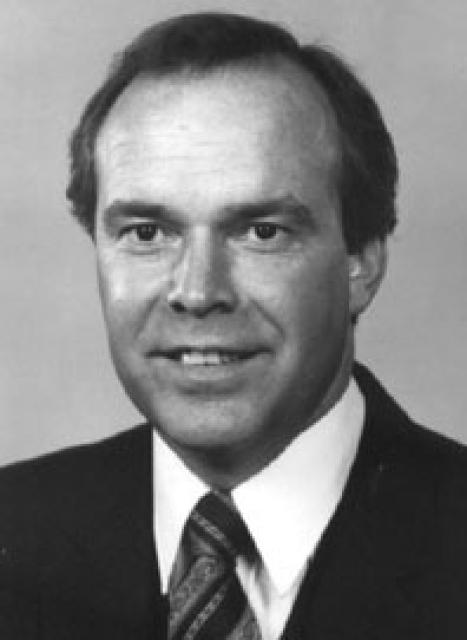
Donald Grant Devine rose from a Saskatchewan farm to the province’s highest political office, bringing an agricultural economist’s outlook to government. As premier from 1982 to 1991, he championed private investment, lower taxes and support for farmers, while his government’s record became entangled in fierce arguments over public ownership, rising debt and a major expense-fraud scandal among former members of his caucus. Devine himself was never charged in that scandal.
Farm Roots and Academic Career
Born in Regina on July 5, 1944, Devine grew up on a family farm near Lake Valley, close to Moose Jaw. The experience left him with a lifelong connection to agriculture. He studied at the University of Saskatchewan, graduating in agricultural economics, then pursued graduate degrees at the University of Alberta and Ohio State University, where he earned a doctorate.
In 1975 he joined the University of Saskatchewan faculty, teaching agricultural economics. The path from farm to classroom and research gave him a profile distinct from many career politicians, and later informed his emphasis on rural priorities and farm policy.
From Party Leader to Premier
Devine entered provincial politics after winning the leadership of Saskatchewan’s Progressive Conservative Party in 1979. In the 1982 election, his party defeated the long-governing New Democrats in a dramatic change of power, winning 55 of 64 seats. He became premier that May and also served as agriculture minister.
His government signaled a sharp turn toward private enterprise. It promoted investment, reduced the role of government in business, sold some public assets and dismantled the province’s Land Bank, replacing it with loans intended to help farmers purchase land. Supporters viewed the approach as a way to expand opportunity and strengthen the private economy; opponents criticized the privatization of Crown assets and the weakening of Saskatchewan’s public sector.
Devine’s government also increased assistance to farmers, including production loans, and took other steps to encourage rural development. The province’s fiscal position, however, became a persistent point of dispute. Saskatchewan faced economic pressures during his tenure, and the government accumulated large deficits and debt. Critics argued that its spending and tax choices were unsustainable; defenders pointed to investment, farm support and business development as part of the government’s response to difficult economic conditions.
In 1986 Devine won a second term. Five years later, his Progressive Conservatives were defeated by Roy Romanow’s New Democrats, ending nine years in office.
The Caucus Expense Scandal
After the government’s defeat, an investigation into fraudulent expense claims in the Progressive Conservative caucus led to criminal convictions for a number of former MLAs and other party figures, including several former cabinet ministers. The scandal deeply damaged the party’s reputation and became one of the most notorious episodes in Saskatchewan politics. Devine was not charged. He said he had not known about the scheme, while also accepting responsibility as party leader for what had occurred under his leadership.
Later Work and Recognition
After leaving office, Devine returned to agriculture and business, maintaining a farm and ranch near Moose Jaw and working as a consultant and director. He remained connected to the University of Saskatchewan and to public discussion of the province’s economic and agricultural future. His later honors included the Saskatchewan Order of Merit in 2009 and induction into the Canadian Agricultural Hall of Fame in 2015.
Legacy
Devine’s legacy remains sharply debated. To admirers, he was a farm-raised economist who put agriculture and private investment at the center of provincial government. To critics, privatization, deficits and the caucus fraud scandal overshadowed his administration. His premiership nevertheless marked a lasting political and economic shift in Saskatchewan, and the arguments it provoked continue to shape how the province remembers the 1980s.