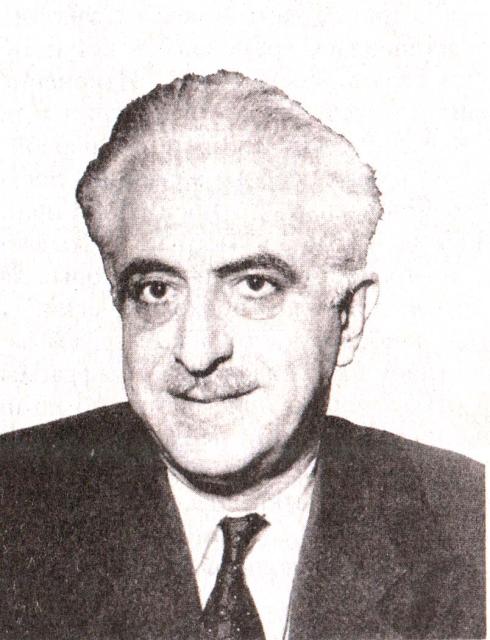
Gregory Penkus
 USA
USA- American Endocrinologist and Biologist Gregory Pincus
- The Importance of the Oral Contraceptive Pill
- The Development of the Oral Contraceptive Pill
- The Role of Gregory Pincus
- The Success of the Oral Contraceptive Pill
- The Legacy of Gregory Pincus
American Endocrinologist and Biologist Gregory Pincus
Gregory Pincus was an American biologist who played a pivotal role in the development of the oral contraceptive pill. Although he was never widely known, he had a much greater impact on the world than many famous individuals. Pincus was born in 1903 in Woodbine, New Jersey, into a Russian-Jewish family. He graduated from Cornell University in 1924 and earned his doctorate from Harvard in 1927.
The Importance of the Oral Contraceptive Pill
The oral contraceptive pill has a dual significance. In a world facing the threat of overpopulation, its importance is evident. Equally revolutionary is the impact of the pill on sexual norms. It is widely acknowledged that the United States has experienced a sexual revolution over the past thirty years. While there are undoubtedly many other political, economic, and sociological factors influencing this revolution, the invention of the pill is the most significant factor. Previously, fear of unwanted pregnancy was the primary reason for women to avoid premarital sex, and sometimes even sex with their lawful spouse. Suddenly, they had the opportunity to engage in sexual relationships without the fear of getting pregnant. Changes in circumstances often lead to changes in attitudes and behaviors.
The Development of the Oral Contraceptive Pill
One could argue that the invention of the first contraceptive pill was not particularly significant, as safe and relatively acceptable methods of contraception were already known. However, this argument fails to appreciate the difference between contraceptive methods that are technically effective and those that are psychologically acceptable. Before the pill, the most commonly recommended contraceptive by "experts" was the diaphragm. While diaphragms were indeed safe and relatively acceptable, the majority of women were reluctant to use them then, just as they are now. Interestingly, when the pill was first tested, thousands of women chose to try an unproven (possibly even dangerous) method of birth control rather than use the safe and time-tested diaphragm.
The Role of Gregory Pincus
Gregory Pincus did not invent the contraceptive pill himself. The compound norethindrone was created by Frank Colton, a biochemist, and later patented by G.D. Searle & Company. However, Pincus was instrumental in its development and played a crucial role in bringing it to market. With his combination of technical knowledge and scientific intuition, Pincus found the defining solution almost immediately. He then requested Dr. Min-Chueh Chang to test the effects of norethindrone on laboratory animals to confirm that it halted ovulation when taken orally. Chang's experiments were successful, laying the foundation for further research.
The Success of the Oral Contraceptive Pill
By 1955, Pincus realized it was time for serious testing of the pill, and trials began in 1956 under the supervision of Dr. Edris Rice-Wray in the San Juan area of Puerto Rico. Over nine months of testing, the oral contraceptive proved remarkably effective. However, it took another three years of testing before the Food and Drug Administration approved the sale of the pill in May 1960.
The Legacy of Gregory Pincus
Although Pincus did not receive the recognition he deserved during his lifetime, he was the driving force behind one of the most significant breakthroughs in birth control methods. He was the scientist who dedicated his time and energy to actively researching oral contraceptives. He had the scientific and organizational skills to successfully complete the project, securing funding and attracting talented individuals to join the effort. Pincus was visionary and determined, bringing the project to a successful conclusion. He was the one who deserves credit for the creation of the pill.
Gregory Pincus authored over 250 scientific papers and published the book "The Conquest of Fertility" in 1965. While he received numerous scientific honors during his lifetime, neither he nor any of the researchers involved in the development of the pill were awarded the Nobel Prize. When Pincus passed away in 1967 in Boston, his death went largely unnoticed by the public and most scientists. Today, his name is mentioned in only a few encyclopedias. Nevertheless, Pincus was the architect of one of the most significant discoveries in human history.


