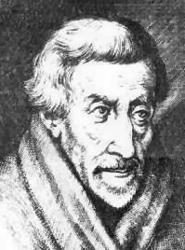
Gregory V
 Turkey
- Patriarch of Constantinople
- Early Life and Education
- Religious Journey
- As Patriarch
- Involvement in the Greek War of Independence
- Martyrdom and Legacy
- Impact on Greek History
Patriarch of Constantinople
Gregory V (Georgios Angelopoulos) served as Patriarch of Constantinople three times: 1797-1798, 1806-1808, and 1818-1821. He played a pivotal role in the Greek War of Independence and is revered as a martyr by the Greek Orthodox Church.
Early Life and Education
Born in 1745 or 1746 in Dimitsiana, Peloponnese, Gregory hailed from a humble family. He received his initial education under the guidance of two hieromonks in his hometown and later pursued advanced studies in Athens under the renowned teacher Dimitrios Voda.
Religious Journey
In 1767, Gregory relocated to Smyrna, where he served as archdeacon and proto-syncellus to Metropolitan Prokopios. His translation of John Chrysostom's homilies into Modern Greek brought him scholarly recognition. From 1785 to 1797, he served as Metropolitan of Smyrna.
As Patriarch
Upon his first election as Patriarch of Constantinople in 1797, Gregory faced opposition and was forced to abdicate twice. He ascended to the patriarchal throne for the third time in 1818. He prioritized the education of the clergy and published works by Basil the Great and Aristotle.
Involvement in the Greek War of Independence
Prior to his final patriarchate, Gregory was invited to join the secret society "Filiki Eteria," which sought to incite a Greek uprising against Ottoman rule. However, he declined due to his vow against swearing allegiance to unknown leaders.
In 1821, when Alexander Ypsilantis initiated the war, Gregory excommunicated him to protect Ottoman Greeks from reprisals. Despite his efforts, the Ottoman authorities began a widespread execution of Greeks following the outbreak of rebellion in the Peloponnese.
Martyrdom and Legacy
On Easter Sunday, 10 April 1821, Gregory was arrested and hanged from the gates of the Patriarchate. His mutilated body was retrieved days later by Greek sailors and brought to Odessa, where he was buried in the Trinity Greek Orthodox Church. In 1871, his remains were transferred to Athens.
Gregory V was canonized by the Ecumenical Patriarchate in 1921. His memory is honored on 10 April in the Julian calendar (23 April in the Gregorian calendar). His relics are enshrined in the Cathedral of the Annunciation in Athens.
Impact on Greek History
Gregory's martyrdom had a profound impact on the Greek War of Independence. His unwavering sacrifice inspired the Greeks and justified their struggle for liberation. It also drew international condemnation of Ottoman atrocities and solidified the patriarch's legacy as a symbol of Greek national identity and resistance.