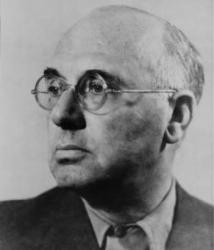
Grigoriy Butakov
 Russia
- Grigory Ivanovich Butakov: A Renowned Russian Admiral
- Naval Career
- 1836-1838: Gained practical experience on ships of the Baltic Fleet.
- 1838-1846: Black Sea Service and Hydrographic Work:
- 1838: Fought in the battle near Tuapse.
- 1846-1855: Officer of Distinction and Innovator:
- 1850: Promoted to captain-lieutenant.
- Crimean War
- March 1855: Promoted to captain, 1st rank.
- 1861-1862: Commanded the squadron of screw-driven ships.
- 1867-1882: Commander of the Baltic Fleet and Naval Reformer:
- 1868: Senior flag officer of the Baltic Fleet.
- 1881: Appointed commander of the St. Petersburg Naval Port.
- Contributions to Naval Science and Practice
- Death and Legacy
Grigory Ivanovich Butakov: A Renowned Russian Admiral
Early Life and FamilyGrigory Ivanovich Butakov was born on September 27, 1820 (October 9, according to the Gregorian calendar), in Riga, Russia. His father, Ivan Nikolaevich Butakov, was a renowned naval captain who had distinguished himself in the Russo-Turkish War. The Butakov family had a rich naval lineage dating back to the 17th century. Grigory's uncle, Alexander Nikolaevich, rose to the rank of major general in the Navy and trained in the British Royal Navy. Five of Grigory's brothers also served in the Navy, with Alexei attaining the rank of rear admiral, Ivan reaching vice admiral, and Grigory himself achieving the highest rank of admiral.
Naval Career
Early Training and Service:May 6, 1831: Joined the Naval Cadet Corps in St. Petersburg.
January 9, 1836: Graduated from the Naval Cadet Corps with distinction.
1836-1838: Gained practical experience on ships of the Baltic Fleet.
March 1838: Assigned to the battleship "Silistria" as flag officer to Admiral Mikhail Petrovich Lazarev, commander-in-chief of the Black Sea Fleet.
1838-1846: Black Sea Service and Hydrographic Work:
May 1838: Participated in landing operations in Abkhazia, earning the Order of St. George with the inscription "For Bravery."
1838: Fought in the battle near Tuapse.
1838: Engaged in a naval battle against mountaineers on board the tender "Luch."
September 1838 - August 1840: Sailed in the Aegean Sea on the schooner "Lastochka," conducting reconnaissance and hydrographic surveys.
1846-1855: Officer of Distinction and Innovator:
April 1843: Promoted to lieutenant for outstanding service.1844: Sailed in the Mediterranean Sea on the schooner "Vestnik."
Autumn 1846-1851: Commanded the tender "Pospeyshny."
Summer 1847-1850: Conducted extensive hydrographic work in the Black Sea, contributing to the development of the first systematic chart of the region, earning the Order of St. Anna, 3rd degree, and a diamond ring.
1850: Promoted to captain-lieutenant.
March 27, 1851: Travelled to England to oversee the construction of the ship "Dunay" and brought it to Sevastopol.
Crimean War
1853-1855: Defense of Sevastopol and Naval Innovation:December 3, 1852 - 1854: Commanded the 11-gun steam frigate "Vladimir."
November 5 (17), 1853: Captured the Turkish steamship "Pervaz-Bahri" in the first-ever battle between steam-powered ships, earning the Order of St. George, 4th degree.
1854-1855: Commanded a squadron of steam frigates in the defense of Sevastopol, supporting land forces with naval gunfire and distinguishing himself in the battles for Malakhov Kurgan.
October 9, 1854: Organized the first instance of indirect fire in Russian naval history.
August 31, 1855: Commanded the scuttling of steam frigates to block the entrance to Sevastopol's harbor.
March 1855: Promoted to captain, 1st rank.
Post-Crimean War Career1855-1877: Senior Naval Officer and Diplomat:
September 1855: Appointed aide-de-camp to the Emperor and chief of staff of the Black Sea Fleet.
August 1856: Promoted to rear admiral with enrollment in the Imperial retinue, becoming the chief commander of the Nikolaev Naval Port and military governor of Nikolaev and Sevastopol.
1860: Transferred to the Baltic Sea as commander of the squadron of screw-propelled ships.
September 5, 1860: Awarded the Order of St. Stanislav, 1st degree, with swords.
1861-1862: Commanded the squadron of screw-driven ships.
1863-1867: Served as naval attaché in England, France, and Italy.October 28, 1866: Promoted to vice admiral.
1867: Chaired the expert naval commission at the Exposition Universelle in Paris.
1867-1882: Commander of the Baltic Fleet and Naval Reformer:
February 6, 1867 - 1877: Commanded the Practical Squadron of ironclad battleships on the Baltic Sea.
1868: Senior flag officer of the Baltic Fleet.
April 16, 1878 - 1881: Promoted to full admiral and appointed commander of the naval fortress of Sveaborg.
1881: Appointed commander of the St. Petersburg Naval Port.
1882: Appointed member of the State Council, signaling his retirement from active command.
Contributions to Naval Science and Practice
Grigory Butakov made significant contributions to naval warfare, including:
Steam-Powered Naval Tactics:Authored the treatise "New Principles of Steamboat Tactics," which laid the foundation for modern naval tactics.
Maneuvering Rules:Developed the "Rules for Maneuvering a Steam-Powered Ship," adopted by navies worldwide.
Hydrographic Mapping:Co-authored the first systematic chart of the Black Sea with Ivan Shestakov.
Minology and Mine Warfare:Established the first laboratory for mine experiments and developed training programs for mine warfare.
Tactics for Small Ships:Devised tactics for the use of small ships in the skerries of the Gulf of Finland.
Anti-Mine Warfare:Outfitted the ironclad frigate "Petropavlovsk" with counter-mine artillery in 1874.
Naval Doctrine:Emphasized the need for a standing navy trained for combat and stressed the importance of live training exercises.
Interoperability:Advocated for the joint operations of naval and land forces.
Death and Legacy
Grigory Ivanovich Butakov passed away on May 31, 1882 (June 12, according to the Gregorian calendar), in St. Petersburg, following a stroke while crossing the Neva River. He was buried with honors in the Church of St. Vladimir in Sevastopol.
Butakov's pioneering work in naval tactics, hydrography, and mine warfare left a lasting legacy in the Russian Navy and beyond. His innovations and ideas continue to influence naval operations and training to this day.