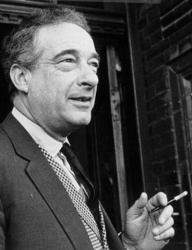
Grigoriy Piatigorskiy
 Russia
- The Cello Master: Gregor Piatigorsky, a Virtuoso of the 20th Century
- Musical Education and Artistic Breakthroughs
- Flight from Russia and International Recognition
- Solo Career and Collaborative Partnerships
- Chamber Music and Film Appearances
- Legacy and Impact
The Cello Master: Gregor Piatigorsky, a Virtuoso of the 20th Century
Early Life and InfluencesBorn on April 17, 1903, in Ekaterinoslav, Russia (today Dnipropetrovsk, Ukraine), Gregor Piatigorsky began his musical journey in humble yet enriching circumstances. His father, a violinist who overcame adversity to study at the Moscow Conservatory, instilled in young Gregor a passion for string instruments.
Amid the turmoil of the Ukrainian revolution and the horrors of the Ekaterinoslav pogrom, music provided solace for Piatigorsky. Hearing a cello performance ignited a fire within him, leading him to craft a makeshift cello from two pieces of wood.
Musical Education and Artistic Breakthroughs
Under the tutelage of a local music director and later at the Moscow Conservatory, Piatigorsky honed his skills. Despite financial hardships, he supported himself as a young musician in Moscow's cafes and orchestras.
A pivotal moment in Piatigorsky's career came when he was invited to collaborate with renowned opera singer Fyodor Chaliapin. His extraordinary rendition of cello solos eclipsed the star singer's performance, earning him both accolades and criticism.
Flight from Russia and International Recognition
Amid the chaos of the October Revolution, Piatigorsky became a member of the Bolshoi Theater Orchestra as a teenage virtuoso. However, the harsh realities of Soviet Russia forced him to flee the country in 1921.
Crossing the border into Poland and evading border guards, Piatigorsky embarked on a perilous journey that led him to Warsaw, Germany, and eventually to the Leipzig and Berlin Conservatories. Disappointed by his musical instruction, he sought refuge in a Russian cafe's instrumental trio.
His talent caught the attention of renowned conductor Wilhelm Furtwängler, who offered him the position of principal cellist in the Berlin Philharmonic Orchestra. His performances as a soloist with the orchestra, including under the composer Richard Strauss himself, brought him international acclaim.
Solo Career and Collaborative Partnerships
In 1929, Piatigorsky embarked on a solo career, captivating audiences with his exceptional interpretations of classical and contemporary works. He became known for his ability to quickly master new pieces, often receiving hastily completed compositions from composers.
Piatigorsky fostered the revival of forgotten and underrepresented musicians. His advocacy for Ernest Bloch's "Schelomo" and first performances of works by Berg, Walton, and Hindemith earned him the respect and collaborations of these composers.
His friendship with Sergei Prokofiev led to the composition of the Cello Concerto (1933), a work Piatigorsky helped refine.
Chamber Music and Film Appearances
Piatigorsky formed a legendary chamber ensemble with Arthur Rubinstein, Jascha Heifetz, and William Primrose, recording numerous acclaimed albums. He also enjoyed intimate musical gatherings with close friends Vladimir Horowitz and Nathan Milstein.
In 1947, Piatigorsky made a cameo appearance as himself in the film "Carnegie Hall," showcasing his virtuosity and charm.
Legacy and Impact
Gregor Piatigorsky became a naturalized U.S. citizen in 1942, continuing to perform and influence generations of musicians. His artistry and dedication to music enriched the world's cultural landscape.
Piatigorsky's exceptional performances captivated audiences, leaving an enduring mark on the history of classical music. He served as a bridge between the old and new musical worlds, fostering collaboration and innovation in the field.
His life story, marked by triumph over adversity, serves as an inspiration for aspiring musicians and music lovers alike.