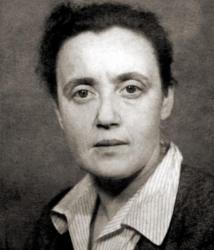
Gudrun Ensslin
 Germany
- The Architect of Revolution: Gudrun Ensslin
- Roots in Activism
- The Firebombing and the Birth of the RAF
- Arrest and Imprisonment
- Suspicious End in "Stammheim"
- Cinematic Portrayals
The Architect of Revolution: Gudrun Ensslin
Early Life and EducationGudrun Ensslin, a pivotal figure in the Red Army Faction, was born in Bartolomae, Germany, in 1940. Her heritage traced back to the philosopher Hegel, and her parents were an evangelical pastor and artist. Ensslin studied at the University of Tübingen, delving into fields such as German Studies, Slavic Studies, and Philosophy.
Roots in Activism
In 1963, Ensslin met Bernward Vesper, a writer and publisher. Together, they reissued the works of his father, a Nazi writer. Their collaboration brought Ensslin closer to the fringes of society and laid the foundation for her radical path.
The Firebombing and the Birth of the RAF
In 1968, Ensslin joined forces with Andreas Baader, Thorwald Proll, and Hubert Zönlein to ignite a firebombing at a department store in Frankfurt. This act was intended to spark awareness about the Vietnam War and the plight of the Third World. It marked the inception of the Red Army Faction (RAF).
Arrest and Imprisonment
Ensslin's involvement in the firebombing led to her arrest and conviction in 1969. The trial gained widespread attention and garnered support for the "arsonists" within left-wing circles in West Germany.
Suspicious End in "Stammheim"
On October 18, 1977, Ensslin, Baader, Jan-Carl Raspe, and Ingrid Schubert were found dead in their prison cells. The official version deemed it a "collective suicide in protest of their prison conditions." However, the circumstances surrounding their deaths, as well as the alleged suicide of Ulrike Meinhof, remain under scrutiny by historians.
Cinematic Portrayals
Ensslin's story has been immortalized in numerous films:- "The Lead Years" (1981) depicted her life alongside her sister Christiane, who contested the official suicide narrative.
- "Stammheim" (1986) captured the RAF's trial, featuring Sabina Wegner as Ensslin.
- "The Baader-Meinhof Complex" (2008) chronicled the history of the faction, with Johanna Wokalek portraying Ensslin.
- "Wer wenn nicht wir" (2011) explored her relationships with Vesper and Baader.
- In 2019, Rammstein frontman Till Lindemann depicted Ensslin in their music video "Deutschland."
Gudrun Ensslin's legacy remains a complex and controversial chapter in German history. As a driving force behind the Red Army Faction, she played a critical role in the organization's violent struggle against the perceived injustices of the time.