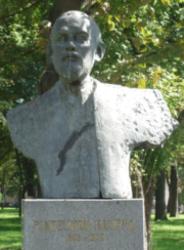
Julia Brystiger
 Poland
- Polish Communist and Colonel of State Security
- Political Repressions in Western Ukraine
- Joining the Polish Communist Party and Military Leadership
- Officer in the Polish Secret Police
- Ideological Fanaticism and Brutality
- Conflict with Ministry of Public Security
- Post-Stalinist Era and Career Transition
- Personal Transformation
- Catholic Faith and Redemption
- Legacy and Representation
Polish Communist and Colonel of State Security
Early Life and Communist ActivismJulia Brystygier, born Julia Preis in 1902 to a Jewish pharmacist, began her education in Lviv and continued in Paris, where she earned a doctorate in philosophy. Her communist leanings led her to join the Communist Party of Western Ukraine in 1927.
Political Repressions in Western Ukraine
Brystygier played a prominent role in communist propaganda and activism in Western Ukraine. Arrested and imprisoned twice, she became a leading figure in the local communist movement, organizing rallies and suppressing political opposition.
Joining the Polish Communist Party and Military Leadership
After Western Ukraine's annexation by the Soviet Union, Brystygier became a Soviet citizen. She continued her political and union activities, rising to prominence in the Polish Soviet-controlled media. Following the outbreak of World War II, she was evacuated to Uzbekistan.
Officer in the Polish Secret Police
In 1944, Brystygier joined the Polish Workers' Party (PPR) and became a member of the National Council. In 1945, she was appointed head of the V Department of the Ministry of Public Security (MOB), responsible for combating political opposition.
Ideological Fanaticism and Brutality
As head of the V Department, Brystygier displayed ideological fanaticism and an exceptional level of brutality. She ruthlessly persecuted Polish intellectuals and the Catholic Church, advocating for the creation of a system of terror to silence them.
Conflict with Ministry of Public Security
Brystygier's strong-arm tactics and independent approach clashed with other MBP officials, including Minister Stanisław Radkiewicz. She personally participated in interrogations, employing torture and exhibiting signs of psychopathology.
Post-Stalinist Era and Career Transition
After Stalin's death in 1953, de-Stalinization began in Poland. Brystygier's influence waned, and the MBP was disbanded in 1954. She briefly headed the III Department of the newly formed Committee of Public Security before resigning in 1956. The threat of arrest and prosecution never materialized.
Personal Transformation
After leaving the security apparatus, Brystygier underwent a significant personal transformation. Writing under her maiden name, Julia Preis, she published several works of fiction. She also sought to ingratiate herself with the literary intelligentsia, who remained wary of her past.
Catholic Faith and Redemption
Brystygier became disillusioned with her former ways and sought redemption through Catholicism. She befriended Catholic clergy and dissidents, embracing the faith and repenting her past actions.
Legacy and Representation
Julia Brystygier passed away a devout Catholic in 1975. Her life has been the subject of several documentaries and is set to be adapted into a political drama film. Despite her notorious past, she is also remembered for her personal journey and her eventual rejection of the communist regime's repressive policies.