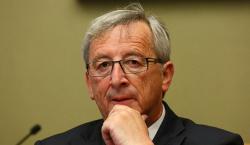
Guido Mantega
 Brazil
Guido Mantega: Biography of a Brazilian Economist and Politician
Guido Mantega is a Brazilian economist of Italian descent and a prominent political figure, currently serving as the Minister of Finance in Brazil. In the ever-changing political landscape of the country, it is rare for ministers to retain their positions after a change in presidency. However, Mantega's talents and dedication to his role have earned him the respect and trust of both the previous and current presidents.

Mantega pursued his education at the School of Economics, Business, and Accounting at the University of São Paulo. He later earned a doctoral degree in Sociology and served as an economics professor at several leading educational institutions in the state. During his tenure as a professor from 1982 to 1987, he taught prominent economists such as Demian Fiocca and Márcio José Rego.

Mantega has always maintained close ties with left-wing activists in the Workers' Party. He is credited with playing a pivotal role in the victory of Luiz Inácio Lula da Silva, the party's founder and leader, in the presidential elections. Mantega served as both a political and economic advisor to da Silva from 1993 onwards and became one of the coordinators of the Workers' Party's economic program in 2002.
Following da Silva's ascent to power, Mantega was appointed as the Minister of Planning and later became the Chairman of the National Bank for Economic and Social Development (BNDES). In these roles, he oversaw financial management and implemented various economic procedures. Mantega assumed the position at BNDES after the retirement of Carlos Lessa.
On March 27, 2006, Guido Mantega became the Minister of Finance in Brazil, succeeding Antonio Palocci. As the finance minister, he actively opposed certain financial techniques employed by the United States government, which he believed gave them an unfair advantage in "currency wars." His statements did not sit well with American officials, who criticized Mantega and his actions. However, even his critics acknowledged his effectiveness as a manager. In 2009, Mantega was included in Time magazine's list of the "100 Most Influential Brazilians."
Following da Silva's departure from politics, Mantega continued his tenure in the government under the presidency of Dilma Rousseff. On November 24, 2010, it was officially announced that Mantega would retain his position as the Minister of Finance, signaling a continuation of the existing economic policies. This decision emphasized the government's intent to maintain stability and consistency in its economic strategy.
Outside of his political career, Guido Mantega has also made contributions as an economist. As a former member of the Brazilian Center for Analysis and Planning, he received the honor of having the preface for his book, "Monopoly Accumulation and Crisis in Brazil," written by Fernando Henrique Cardoso. Another book authored by Mantega, "Conversations with Brazilian Economists II," co-written with Márcio José Rego, received a preface from Luiz Gonzaga Belluzzo.