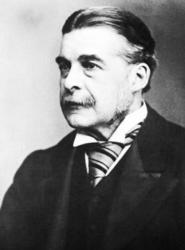
Josef Hauer
 Austria
- Josef Matthias Hauer: Pioneer of the Twelve-Tone System
- Development of the Twelve-Tone System
- Artistic Output and Recognition
- The Forty-Four Trope System
- Evolution of His Compositions
- Later Years and Legacy
Josef Matthias Hauer: Pioneer of the Twelve-Tone System
Early Life and EducationJosef Matthias Hauer was born in Wiener Neustadt, Austria, in 1883 and passed away in Vienna in 1959. His musical journey began with informal training on various instruments, including the zither, cello, organ, and choral singing. Notably, he claimed to have developed an understanding of music theory independently, as he received no formal instruction in this area.
Development of the Twelve-Tone System
In 1918, Hauer published his first work on music theory, entitled "The Theory of Timbre." This was followed by extensive research and experimentation with the twelve-tone system. In August 1919, he began developing his own method of musical composition based on this system.
Artistic Output and Recognition
Hauer prolifically composed both musical pieces and theoretical works until 1938, when his music was deemed "degenerate art" by the Nazis. Despite these restrictions, he continued to compose during the war era, but cautiously refrained from publishing his works. After the war, despite having written hundreds of pieces, Hauer published very little.
The Forty-Four Trope System
Hauer independently developed a twelve-tone system known as the "Forty-Four Trope System." This system revolved around 44 six-tone groups that provided the melodic and harmonic foundation for his compositions. The reasons for his choice of 44 tropes remain enigmatic, but some musicologists speculate that it may have stemmed from his interest in ancient Chinese history and its 44 provinces during a particular period.
Evolution of His Compositions
Hauer's early compositions were influenced by Arnold Schoenberg's atonal music. After his "Nomos," Op. 19 (August 1919), which is considered the first twelve-tone composition, he exclusively employed his trope technique. Hauer's goal was to create a "universal" musical language, which he envisioned as a "cosmic game with 12 tones."
Later Years and Legacy
During his third creative phase, from 1940 until his death in 1959, Hauer focused solely on composing twelve-tone pieces, amounting to several hundred works. His pioneering contributions to music theory and composition received significant recognition from the 1960s onward. While his sound-color concept of "Melos" did not receive critical acclaim, Hauer's legacy as a significant innovator in the realm of twelve-tone music remains secure.