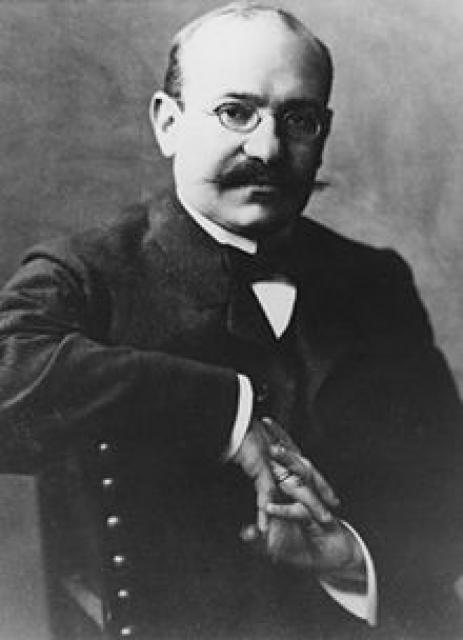
Gustav Aschaffemburg
 USA
USA- A Brilliant Mind: The Extraordinary Life of Gustav Aschaffenburg
- Academic Career in Germany
- Contributions to Legal Psychology
- Leadership in Criminal Science
- Emigration and Legacy
A Brilliant Mind: The Extraordinary Life of Gustav Aschaffenburg
Early Life and EducationGustav Aschaffenburg, a pioneering German-American psychiatrist, was born on May 23, 1866, in Zweibrücken, Germany. His exceptional academic journey began in 1885 when he embarked on medical studies at Heidelberg University. In pursuit of a comprehensive understanding of psychiatry, he continued his education at prestigious institutions in Würzburg, Freiburg, Berlin, Strasbourg, Vienna, and Paris.
Academic Career in Germany
Upon completing his medical training in Strasbourg, Aschaffenburg returned to Heidelberg as an assistant to renowned psychiatrist Emil Kraepelin. His groundbreaking research on associative psychology earned him a doctoral degree in 1895. Aschaffenburg's unwavering dedication to mental health led to his appointment as a lecturer in psychology and psychiatry in 1900.
Contributions to Legal Psychology
Aschaffenburg's pioneering work in legal psychology established him as a preeminent authority in the field. In 1902, he published his seminal work, "Das Verbrecher und seine Bekampfung," which introduced a typology of criminals based on characterological traits. His research on the influence of drugs on psychological processes and his contributions to the criteria for legal insanity shaped the landscape of criminal justice.
Leadership in Criminal Science
Aschaffenburg's commitment to criminal science extended beyond his academic work. In 1904, he assumed the prestigious chair of Psychiatry and the directorship of the Psychiatric and Neurological Clinic at the University of Cologne. In 1929, he founded the Institute for Scientific Criminology, solidifying Cologne's reputation as a hub for criminal research. Aschaffenburg also edited the respected journal, "Monatschrift für Kriminalpsychologie und Strafrechtsreform," and co-authored a comprehensive textbook on psychiatry, "Aschaffenburgs Handbuch der Psychiatrie."
Emigration and Legacy
The rise of Nazi Germany forced Aschaffenburg to flee his homeland in 1938. He sought refuge in Switzerland before ultimately settling in the United States. Undeterred by his displacement, he continued his research and advocacy for mental health and criminal justice reform. Gustav Aschaffenburg passed away in Baltimore on September 2, 1944, leaving behind an enduring legacy as a brilliant psychiatrist and a pioneer in the field of legal psychology.


