Gustav Kurbe
 France
- Gustave Courbet: A Pioneer of Realism
- Defying the Academy
- Radical Visionary
- A Friend in Bruyas
- Imperial Conflict
- Monumental Consequences
- Courbet's Legacy
Gustave Courbet: A Pioneer of Realism
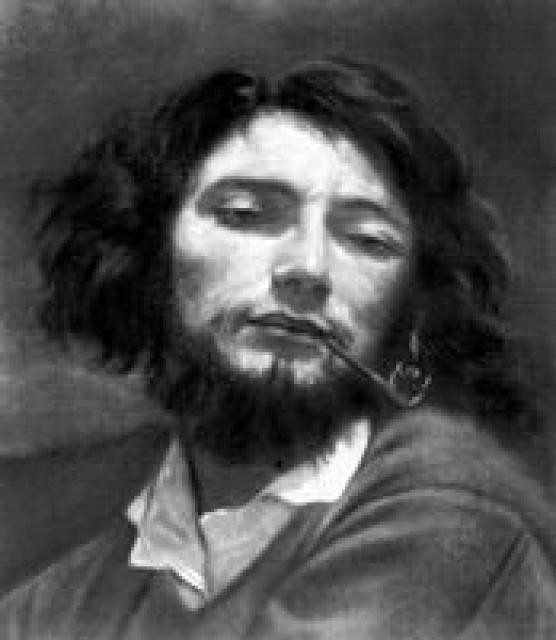
Born to a farming family, Gustave Courbet (1819-1877) emerged as a self-taught artistic force in the realm of Realism.
Defying the Academy
As an outspoken artist, Courbet challenged the conventions of the Paris art world, which was dominated by the academic establishment. He believed that painting should reflect contemporary life in a simple and intelligible manner. His evocative titles, such as "The Stone Breakers" and "The Sleeping Spinner," underscore his commitment to depicting the everyday experiences of ordinary people.
Radical Visionary
Courbet's paintings often ignited controversy due to their raw realism and lack of embellishment. His masterpiece, "A Burial at Ornans," presented a sobering depiction of a provincial funeral, exposing the societal and religious hypocrisies of his time. The painting's monumental size and uncompromising portrayal of humanity shocked contemporary critics.
A Friend in Bruyas
In the midst of criticism, Courbet found solace in the patronage of Alfred Bruyas, a wealthy art collector from Montpellier. Bruyas recognized the artist's spirit and purchased several of his works, including the infamous "The Bathers." This encounter inspired Courbet's painting, "The Meeting," which depicts his encounter with Bruyas and his servant.
Imperial Conflict
Despite his recognition, Courbet faced resistance from Emperor Napoleon III, who dismissed his work as vulgar and anti-establishment. The emperor's disdain did not deter Courbet, who continued to challenge authority through his art. As the Franco-Prussian War loomed, Courbet's revolutionary zeal manifested in his participation in the Paris Commune, a short-lived socialist uprising.
Monumental Consequences
As the chairman of the Commission of Fine Arts during the Commune, Courbet played a key role in the destruction of the Vendôme Column, a symbol of imperial power. Afterward, as the Commune faltered, Courbet was imprisoned and exiled from France. The trauma of exile shattered his spirit and dimmed his once-radiant vision.
Courbet's Legacy
Today, Gustave Courbet is hailed as a pioneer of Realism, whose unflinching depictions of society paved the way for future generations of artists. His unwavering commitment to truth and his tireless advocacy for the common people continue to inspire those who believe in the transformative power of art.