Gustav von Wangenheim
 Germany
- Biography of Gustav von Wangenheim
- Early Career
- Communist Activism
- Exile and Soviet Union
- Post-War Career
- Personal Life and Legacy
Biography of Gustav von Wangenheim
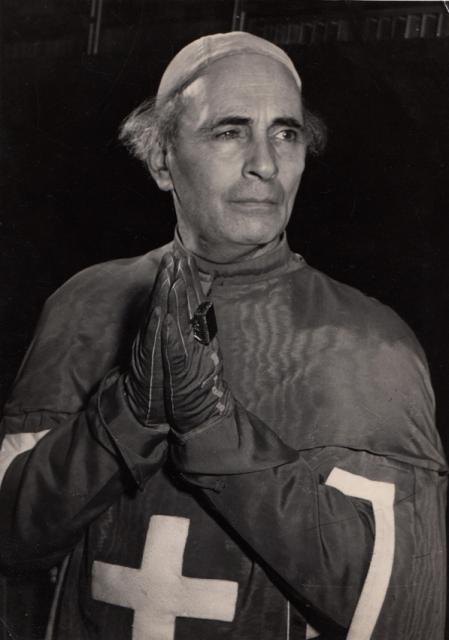
Gustav von Wangenheim, born Ingo Clemens Gustav Adolf Freiherr von Wangenheim, was a German actor, director, screenwriter, and playwright. He was born in Wiesbaden, Germany, in 1895 to parents who were both actors. His father, known by the pseudonym Eduard von Winterstein, appeared in more than 200 films between 1910 and 1960.
Early Career
Wangenheim made his debut in 1914 in the film "Passionels Tagebuch" and gained popularity throughout the 1920s. Some of his notable films during this period include the short film "Kohlhiesels Töchter" (1920), the lighthearted 45-minute film "Romeo und Julia im Schnee" (1920), the horror film "Schatten - Eine nächtliche Halluzination" (1923), and the comedy-drama "Frau im Mond" (1929).

Communist Activism
In 1921, von Wangenheim joined the Communist Party of Germany. In 1931, he founded the theatre company "Die Truppe," which had a communist ideology. However, the company was shut down shortly after in 1933 when the Nazis came to power. Despite this, von Wangenheim managed to write and direct several plays during this time.

Exile and Soviet Union
Due to the rising influence of the Nazis, von Wangenheim was forced to flee Germany. He found refuge in the Soviet Union, where he continued writing and lived in exile. In 1936, during the Stalinist purges, von Wangenheim was involved in the condemnation of his colleagues Carola Neher and Anatol Becker as "Trotskyists." Becker was executed, and Neher was sentenced to five years in the Gulag, where she eventually died.

Post-War Career
After World War II, von Wangenheim returned to East Germany and worked in the German film industry (DEFA) as a screenwriter and director. His first directorial experience was the drama "Kämpfer" (1936), set in Germany in 1933. Some of his other directorial works include "Und wieder 48" (1948), "Der Auftrag Högler" (1950), "Gefährliche Fracht" (1954), and "Heimliche Ehen" (1956). He also wrote the screenplays for his films.
Personal Life and Legacy
Von Wangenheim was married to Inge von Wangenheim (nee Franke) from 1931 to 1954, and they had a son named Friedel von Wangenheim. Inge's surname was annulled after their divorce. Gustav von Wangenheim passed away on August 5, 1975, in East Berlin. Throughout his career in cinema, he acted in at least 18 roles, directed five films, and wrote four screenplays. He was also one of the founders of the National Committee for a Free Germany.