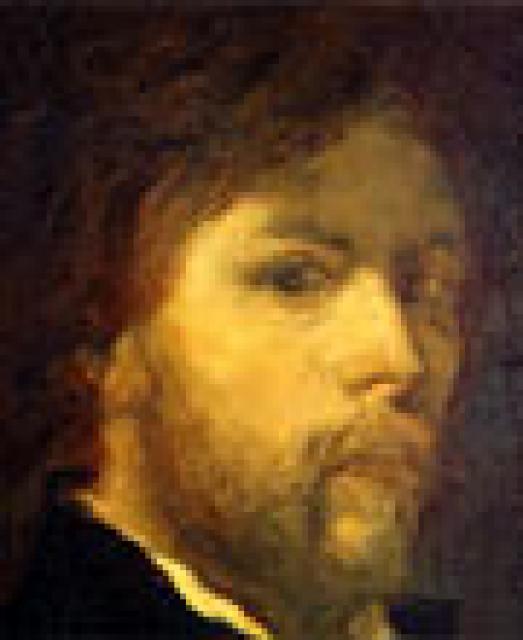
Gustave Moreau
 France
- Early Life and Education
- Travels and Artistic Development
- Artistic Success in the Salon
- Symbolist Movement and Artistic Style
- Personal Life and Artistic Influences
- Later Years and Legacy
Early Life and Education
Gustave Moreau was born on April 6, 1826, in Paris, France, into an architect's family. He began his artistic training at the École des Beaux-Arts under the guidance of Théodore Chassériau and François-Édouard Picot.
Travels and Artistic Development
Moreau embarked on a journey to Italy from 1857 to 1859, where he immersed himself in the study of classical masters. During this period, he also visited the Netherlands in 1885, broadening his artistic horizons.
Artistic Success in the Salon
From 1849 onwards, Moreau exhibited his works at the Salon, an annual exhibition of art held in Paris. His paintings, characterized by their mythological, religious, and allegorical themes, gained critical acclaim. His most notable works from this period include "Oedipus and the Sphinx" (1864), "Orpheus" (1865), "Salome" (1876), and "Galatea" (1880).
Symbolist Movement and Artistic Style
Moreau was associated with the Symbolist movement, rejecting the objectivity and naturalism of the Impressionists. He drew inspiration from literature and mythology, often juxtaposing them in his compositions. Moreau's paintings are characterized by their fantastical imagery, intricate details, and evocative atmospheres.
Personal Life and Artistic Influences
In 1859, Moreau met Alexandrine Dureux, who became his lifelong companion. Their relationship had a significant impact on his art, as evidenced in his painting "Orpheus at the Tomb of Eurydice" (1891), dedicated to her memory after she passed away in 1890.
Later Years and Legacy
In 1888, Moreau was elected to the Académie des Beaux-Arts and later became a professor at the École des Beaux-Arts. In his final years, he continued to create masterpieces, including "Jupiter and Semele" (1894-1895). Despite declining health, Moreau remained dedicated to his art until his passing on April 18, 1898. Today, his works are revered for their unique blend of fantasy, allegory, and symbolism, inspiring generations of artists to come.



