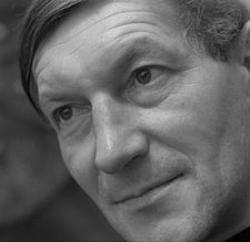
Ren Renfa
 China
China- Ren Renfa: A Chinese Artist during the Yuan Dynasty
- The Horse Paintings
- The "Thin and Fat Horse"
- Other Paintings
- Conclusion
Ren Renfa: A Chinese Artist during the Yuan Dynasty
Early Life and CareerRen Renfa (1254-1322) was a Chinese artist who lived during the rule of the Yuan dynasty, a Mongol dynasty founded by Kublai Khan, the grandson of Genghis Khan. The establishment of foreign rule over China caused divisions within the Chinese scholar-official class. Some refused to collaborate with the new regime, becoming "yi-min" (literally, "leftovers") and having to find ways to earn a living outside of government service. Others, such as the renowned artist and administrator Zhao Mengfu, agreed to serve the Mongol administration. Ren Renfa belonged to the latter group.
Born in Pizhou, Jiangsu province, Ren Renfa's family later moved to Songjiang, near Shanghai. His daughter married an official of Central Asian origin from the Kangli clan, a family that actively assisted in the establishment of Mongol rule in China. Ren Renfa was trained as a hydraulic engineer and held the position of deputy chief inspector of irrigation works in the Mongol administration. He contributed to the engineering of rivers in Shanghai and Beijing, and even left behind a scholarly work on hydraulics.
The Horse Paintings
In his spare time, Ren Renfa pursued painting, an activity that brought him greater fame than his hydraulic engineering. He was traditionally renowned as a master of depicting horses. "Horse portraits" had existed in Chinese painting for centuries, with Han Gan of the Tang dynasty considered the genre's greatest exponent. With the rise of the Mongols, for whom horses were not only a means of transport but also a means of sustenance, this genre experienced a revival, with Zhao Mengfu becoming a celebrated master of it. However, Ren Renfa's horse paintings also found favor with the emperor.
Most of Ren Renfa's works on this subject are relatively neutral in content, such as "Four Grooms and Three Horses" (Cleveland Museum of Art), "Nine Horses" (Nelson-Atkins Museum of Art, Kansas City), "Horses and Grooms" (Victoria and Albert Museum, London), and "Tethered Horse" (Indianapolis Museum of Art). However, his most famous work is the satirical scroll painting "The Thin and the Fat Horse" (Forbidden City, Beijing).
The "Thin and Fat Horse"
In Chinese tradition, the horse has been a symbol of the feminine principle, subservient to the male rider. Over time, as a literate, scholar-official class developed in China, the horse became a symbol of the Chinese official. The symbolic meaning of Ren Renfa's painting is straightforward, especially since the artist left an annotation on the scroll itself. He first describes the contrasting lives of the thin and fat horses, then openly laments: "Officials can be honest or thieves. The one who has not grown fat but made the country strong is honest, while the one who has gorged himself like a fat cat is a thief for sure." The rule of the Mongol administration encouraged rampant corruption. Among the ministers of the Yuan dynasty were many foreigners who had little regard for the fate of the Chinese nation. It was this situation that evoked the bitter satire found in Ren Renfa's work.
Other Paintings
Contrary to popular belief, Ren Renfa did not paint only horses. He was also accomplished in the genres of "flowers and birds" and "figure painting." Of his "figure paintings" (apart from grooms with horses), only one work has survived: "Zhang Guo at Emperor Minghuang's Court" (Forbidden City, Beijing). Zhang Guo was a Daoist magician who could travel vast distances on a magical mule. When staying overnight, Zhang Guo would fold his mule like paper and put it in his hat case. When needed, he would bring the mule back to life by spraying it with water from his mouth. Ren Renfa's painting depicts the moment when Zhang Guo demonstrated his magical abilities to the Tang emperor Minghuang (Xuanzong, reigned 712-756). The old magician watches with a sly smile as a young boy releases the magical mule, which flies towards the emperor. Minghuang leans forward in excitement, while a court official watching the event gapes in astonishment. Ren Renfa's painting is close in style to Song painting, devoid of the archaisms favored by his contemporary Zhao Mengfu. Indeed, all of Ren Renfa's surviving works have a strong affinity with "Song realism."
Conclusion
Ren Renfa was not a major artist who created a new style or direction in painting. He is celebrated in history primarily as the author of the satirical scroll painting "The Thin and the Fat Horse."