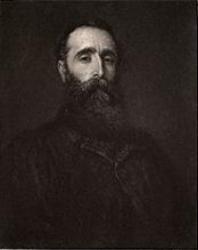
Leon Cogniet
 France
Paul Delaroche
French artist Paul Delaroche was a prominent representative of both Neoclassicism and Romanticism. In 1812, he enrolled in the École des Beaux-Arts in Paris, studying under renowned painter Pierre-Narcisse Guérin. With his mentor's support, Delaroche presented his work at the French Academy in 1814. In 1815, he received the Second Prize for "The Return of Briseis to Achilles" and the First Prize for "The Liberation of Helen by Castor and Pollux" in 1817.
Italian Sojourn
Delaroche's success secured him a stipend for a five-year stay at the Villa Medici in Rome. During this period, he immersed himself in Italian art and history, which significantly influenced his later work.
Return and Acclaim
Upon his return to France in 1822, Delaroche exhibited "Marius on the Ruins of Carthage" and "The Massacre of the Innocents," gaining wide recognition. In 1831, he achieved fame with "The Abduction of Rebecca by the Templars," inspired by Walter Scott's "Ivanhoe."
Artistic Triumphs
One of Delaroche's most celebrated works, "Tintoretto Painting his Dead Daughter," became a sensation in 1843. He also taught a prominent group of students.
Decline and Legacy
Delaroche exhibited his final work, "La Vicomtesse de Noailles," at the Paris Salon in 1855. Gradually withdrawing from art, he ceased teaching at the École des Beaux-Arts in 1863. Delaroche passed away in obscurity, leaving behind a significant legacy in the history of French art.