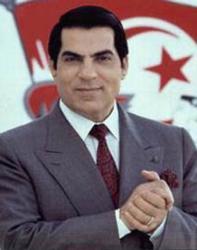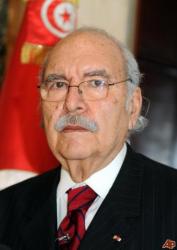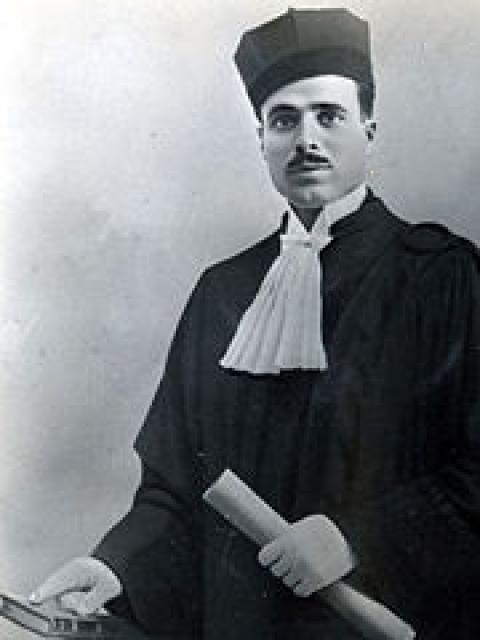
Habib Burgiba
 Tunisia
Biography of Habib Bourguiba
Early Life and Political Activism
Habib Bourguiba was a Tunisian politician and the first president of Tunisia. He served as the president from July 25, 1957, to November 7, 1987. In his youth, Bourguiba was a lawyer and publisher of several newspapers. He was an activist for the Destour Party and frequently faced imprisonment for his agitation against French colonial authorities. During World War II, he was released from arrest by the Nazis in 1942 and was received by Mussolini in 1943, who hoped to sway him to his side. However, Bourguiba returned to Africa and in a speech on April 7, 1943, declared his confidence in the defeat of Germany and Italy, calling for resistance against them. After the war, he traveled to many European countries, raising funds for the anti-colonial movement in Tunisia. In 1949, Bourguiba returned to Tunisia and continued his political struggle for independence. He was arrested again in 1952.
Presidency and Reforms
After the ascent of Pierre Mendès-France's government in France, which supported the idea of expanding political powers of French colonies, Bourguiba was released and continued his legal fight for independence. In March 1956, Bourguiba was elected as the Chairman of the Constitutional Assembly of Tunisia. On July 25, 1957, the Republic of Tunisia was proclaimed, and Bourguiba assumed the position of its president.
During his presidency, Bourguiba initially experimented with building socialism but eventually abandoned the socialist model in favor of a liberal one in the early 1970s. Despite this shift, he maintained relations with the Soviet Union and maintained a socialist facade. Hédi Nouira was appointed as the prime minister, and under his leadership, Bourguiba implemented significant economic and political reforms. These reforms included extensive expansion of women's rights, which was unusual for an Islamic country, as well as improvements in the levels of education. Bourguiba also banned polygamy and introduced legislative procedures for divorce.
Later Years and Legacy
In 1987, Prime Minister Zine El Abidine Ben Ali removed Bourguiba from power due to his "health condition," and he remained under the "protection of the government" afterward. Bourguiba was buried with honors, and a mausoleum was constructed in his honor in April 2008.
Bourguiba's first wife was Mathilde Lorrain, whom he met in Paris in 1925. She converted to Islam in 1927 and took the name Mufida Bourguiba in their marriage. They had one son, Habib Bourguiba Jr. Later, Bourguiba entered into a second marriage with a representative of the influential Ben Ammar clan, and he adopted her daughter, Hadjer Bourguiba.