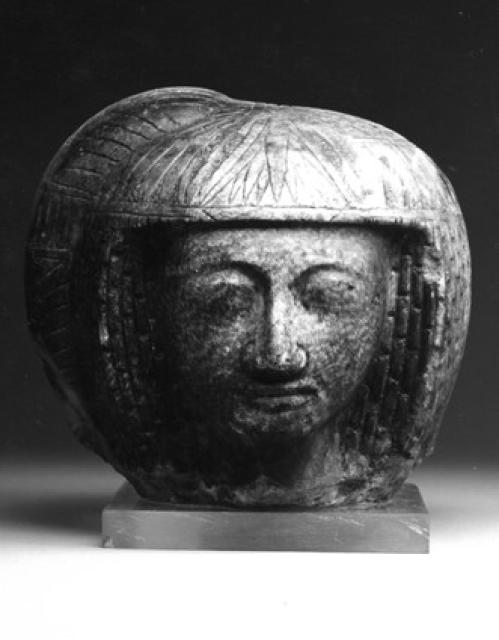
Haemuas
 Egypt
Egypt- Prince Khaemwaset
- Early Life and Education
- High Priest of Ptah
- Building and Restoration Projects
- Study of Ancient Texts
- Ceremonies and Festivals
- Burial of Apis Bulls
- Family and Legacy
Prince Khaemwaset
Khaemwaset was an ancient Egyptian prince who lived between 1240 and 1235 BCE. He was one of the eldest and most well-known sons of Pharaoh Ramesses II and Queen Isetnofret.
Early Life and Education
As the possible heir to the throne, Khaemwaset received an extensive education. He participated in his father's early military campaigns in the Eastern Mediterranean and Nubia. Reliefs depict him accompanying Ramesses II on his chariot during a Nubian expedition.
High Priest of Ptah
In 1274 BCE, Khaemwaset shifted from a military career to the priesthood of Ptah. By 1265 BCE, he had become the high priest of this god. His appointment likely aimed to strengthen the power of the Memphis priesthood to counterbalance the influence of the powerful Amun priesthood of Thebes.
Building and Restoration Projects
As high priest, Khaemwaset oversaw the construction of numerous structures, including the Ramesseum, the hypostyle hall of the temple of Amun-Ra at Karnak, the Great Temple of Ptah in Memphis, and the capital city of Per-Ramesses. He also initiated the restoration of various pyramids, temples, and tombs in Memphis and its surroundings.
Study of Ancient Texts
Khaemwaset is often referred to as the "first Egyptologist" due to his interest in studying and preserving ancient texts. He examined libraries and wall inscriptions of the temples he restored.
Ceremonies and Festivals
Khaemwaset organized and oversaw Heb Sed festivals. These rituals reaffirmed the strength and vitality of the pharaoh at specific intervals during their reign. He erected stelae commemorating these ceremonies.
Burial of Apis Bulls
Following the death of an Apis bull, sacred to Ptah, Khaemwaset ordered its burial in the tomb of its predecessor. He also constructed a communal burial ground for Apis bulls, known as the Serapeum.
Family and Legacy
Khaemwaset's wife was likely named Nubnofret. They had three known children. After the death of his brother, Prince Ramesses, Khaemwaset became heir to the throne in 1235 BCE. However, he died four years later. His memory was revered for his wisdom and scholarship, with stories and legends about him persisting in later Egyptian literature.


