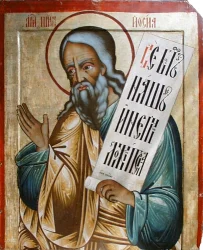
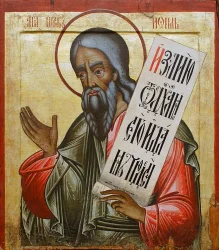
Haggai
Haggai was a prophet in Jerusalem whose short ministry helped restart the rebuilding of the city’s temple after the Babylonian exile. The biblical book bearing his name preserves a series of urgent messages from 520 BCE, when the returning community was trying to rebuild its life under Persian rule. His focus was practical and immediate: he urged the people and their leaders to put the unfinished temple back at the center of communal life.
A prophet in Persian-period Judah
Little is known about Haggai’s personal history. The biblical text gives no clear account of his family, birthplace, or life before his prophetic work. It places him in Judah during the second year of the Persian king Darius I, which corresponds to 520 BCE. At that time, Zerubbabel served as governor and Joshua as high priest.
The first Jerusalem temple had been destroyed by the Babylonians in 586 BCE. After the conquest of Babylon by the Persians, some exiles returned to Judah and began restoring worship and rebuilding the temple. The project had stalled, and the community faced difficult conditions as it tried to recover from displacement and political upheaval. Haggai’s messages addressed that discouragement and the question of what the community should prioritize.
Calling the community to rebuild
The Book of Haggai records dated oracles delivered between August and December 520 BCE. Haggai challenged the people for living in finished homes while the temple remained in ruins, and connected the hardship they faced with their neglect of the rebuilding project. He called on Zerubbabel, Joshua, and the wider community to resume the work.
According to the biblical account, the leaders and people responded, and construction began again. Haggai then encouraged them not to be disheartened if the new building seemed less impressive than the first temple. He promised that the restored temple would have a significant future and assured the builders that God’s presence remained with them. The book’s closing message singled out Zerubbabel, presenting the governor as a chosen leader in a time of political uncertainty.
The rebuilding was also supported by the prophet Zechariah, Haggai’s contemporary. Together their appeals are associated in the biblical record with the renewal of construction. The Second Temple was completed several years later, around 516 BCE.
The Book of Haggai
The book is one of the Twelve Minor Prophets in the Hebrew Bible and consists of only two chapters. Its compact form gives it unusual historical precision: the dated messages anchor its activity to a few months in the reign of Darius. Rather than recounting a prophet’s whole life, the text focuses on public speech, the response of the community, and the temple project that defined the moment.
Legacy
Haggai’s personal story remains unknown, but his words stand at a turning point in the history of post-exilic Judah. The temple project became a central part of rebuilding religious and communal life in Jerusalem. His short book preserves a direct appeal to a discouraged people and a record of how prophetic leadership, local government, and community effort converged around that task.