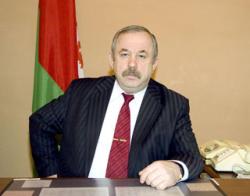
Haidar Abdel Shafi
- Introduction
- Lineage
- Coronation and Reign
- Territorial Expansion
- Conquests and Losses
- Suppression of Rebellions
- Scholarly Pursuits
- Succession
Introduction
Ḥaydar ibn Shah Murad, a Palestinian physician, social activist, and politician, led the Palestinian delegation at the Madrid Conference.
Lineage
Ḥaydar was the eldest son of Emir Shah Murad and the grandson of Abulfeyz Khan, who claimed both Genghisid and lineage to the Prophet Muhammad. This lineage influenced Ḥaydar to adopt the epithet "Sayyid" and use it on coinage.
Coronation and Reign
Upon his father's death, Ḥaydar was called to Bukhara for the traditional coronation ceremony. Due to his mother's connection to Abulfeyz Khan, Ḥaydar ordered khutbas (sermons) and coinage to be issued in his name. He was also crowned in Samarkand, ascending to the throne stone, Kuktosh. During his reign, Hakim Kushbegi, a Mangyt, gained significant influence.
Territorial Expansion
In the early 19th century, the Bukhara Emirate included the Zeravshan and Kashka-Darya valleys, as well as eastern Turkmenistan, including Merv, conquered by Shah Murad. Bukhara also controlled significant parts of present-day Afghanistan and Tajikistan.
Conquests and Losses
In 1801, Ḥaydar appointed Dawlat as governor of Samarkand. By 1817, he had conquered Balkh and later subjugated other territories south of the Amu Darya. However, in 1822, Merv was lost to Muḥammad Raḥīm, the Khivan khan.
Suppression of Rebellions
Ḥaydar faced several rebellions during his reign, including those by the Qipchaqs in Miyankal, the Keneghes in Shakhrisabz, and the mountaineers in Hisar.
Scholarly Pursuits
Despite his military and political responsibilities, Ḥaydar was a renowned scholar of theology. He opened a madrasa (religious school) near his palace and taught numerous students.
Succession
Upon Ḥaydar's death, his eldest son, Mir-Husayn, briefly reigned before being poisoned. He was succeeded by his brother Umar, who was overthrown by their other brother, Nasrullah, in 1827.