Halford Mackinder
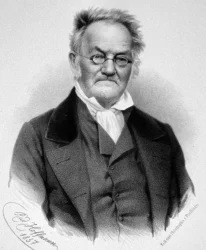
Halford Mackinder was a British geographer, teacher, explorer, and politician who helped establish geography as a university subject in Britain. Today he is best known for his “Heartland” theory, an argument that the geography of Eurasia could shape the balance of world power. His career ranged from building academic institutions to serving in Parliament and working as a British envoy during the Russian Civil War, while his scholarship remained closely tied to the imperial ambitions of his era.
From Oxford lecturer to explorer
Born in Gainsborough, Lincolnshire, on 15 February 1861, Mackinder was the eldest of six children in a family of doctors. At Oxford he studied natural science and history, then trained in law in London. His academic interests, however, drew him toward geography. In 1887 he delivered a landmark address on the subject’s scope and methods and became Oxford’s reader in geography.
Mackinder argued that geography connected the natural sciences with history and politics. He was an energetic teacher, including through Oxford’s extension courses for working people, and in 1899 helped establish the university’s School of Geography. To strengthen its position, he organized an expedition to Mount Kenya. In September of that year, his party achieved the first recorded ascent of the mountain’s main summit. The expedition’s records also describe severe treatment of porters, a reminder that his achievements took place within the coercive structures of British colonial rule.
The Heartland and public life
In 1904 Mackinder presented “The Geographical Pivot of History” to the Royal Geographical Society. He proposed that the interior of Eurasia, protected from sea power and rich in resources, could become a strategic center of global influence. He later developed this argument into the “Heartland” theory, especially in his 1919 book Democratic Ideals and Reality. The theory became influential in geopolitical debate, though later writers often simplified or repurposed it.
Mackinder also helped shape institutions. He directed the London School of Economics from 1903 to 1908 and represented Glasgow in the House of Commons from 1910 to 1922. A Unionist and advocate of tariff reform, he saw geographical knowledge as a tool for protecting Britain’s imperial position. After the First World War, he served as British High Commissioner to South Russia, where he dealt with the anti-Bolshevik forces during the Russian Civil War. From 1920 to 1939, he chaired the Imperial Shipping Committee.
Ideas and legacy
Mackinder’s personal life included his 1889 marriage to Emilie Catherine Ginsburg. He continued writing and lecturing across a long public career, seeking to make geography useful to students, citizens, and policymakers. His work helped make maps and spatial relationships central to discussions of strategy and international affairs.
His legacy is influential but contested. The Heartland framework remains a reference point in geopolitics, even as scholars debate its limits and its use by later political movements. Mackinder also advanced the academic standing of geography in Britain. Remembering both his institutional achievements and his commitment to empire gives a fuller picture of a thinker whose ideas linked scholarship to the power politics of his time.