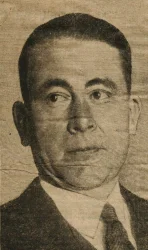
Friedrich Ratzel
- From pharmacy to geography
- A new study of people and place
- The controversial idea of “living space”
- A wide-ranging scholar
- Legacy
Friedrich Ratzel helped establish human and political geography as modern fields of study. A trained zoologist who became a professor and widely read travel writer, he explored how environment, migration and territory shaped human societies. His work also carried the assumptions of nineteenth-century imperialism, and the term “Lebensraum” (“living space”) later became notorious after its appropriation by Nazi ideology.
From pharmacy to geography
Ratzel was born in Karlsruhe on 30 August 1844, in the Grand Duchy of Baden. He first trained as a pharmacist, then turned to natural science, studying zoology and geology in Karlsruhe and Heidelberg. He earned a doctorate in zoology in 1868.
His early work and interests brought him into contact with evolutionary thought and natural history. After traveling through southern Europe, he became a journalist and travel correspondent. Between 1873 and 1875 he traveled through the United States, Mexico and Cuba, writing about landscapes, cities, migration and cultural life. The experience of seeing societies across different regions became central to his later geographical questions.
A new study of people and place
Ratzel taught geography in Munich and, from 1886, at the University of Leipzig. His two-volume *Anthropogeographie* (1882–1891) examined how human populations were distributed and how they interacted with climate, landforms, plants, animals and routes of movement. Rather than treating geography as a catalog of places, he tried to explain the connections between physical settings and social history.
In *Political Geography* (1897), he considered the state in relation to territory, population and power. His ideas helped shape later geopolitics and influenced scholars around the world. At times, he used biological metaphors for states and societies, framing political growth through concepts of movement, competition and space. These analogies proved influential, but they could also turn complex histories into overly broad generalizations.
The controversial idea of “living space”
Ratzel used the term “Lebensraum” in a biogeographical essay in 1901. In his writing, it described the space and resources that living beings and human societies required, and formed part of his effort to connect geography with political development. His views were shaped by the colonial and imperial debates of his era.
Later political thinkers reworked the concept into arguments for territorial expansion. Nazi ideologues made “Lebensraum” a central justification for conquest, forced displacement and racial empire. Ratzel died decades before the Nazi regime and did not formulate its program, but his language and some of his premises contributed to a political tradition that was later radicalized. Historians continue to debate the relationship between his work and those later uses.
A wide-ranging scholar
Ratzel wrote on ethnography, migration, commerce, transportation and regional landscapes, alongside his best-known work in human and political geography. He was also an influential teacher whose lectures drew students from Germany and abroad. His wife, Marie Wingens, shared his interest in travel and accompanied him on some journeys; they had two daughters.
He died in Ammerland, Bavaria, on 9 August 1904, shortly before his sixtieth birthday. His career had helped make geography a discipline concerned with the movement of people and the political meaning of space.
Legacy
Ratzel’s work remains important and troubling in equal measure. He helped geographers ask how landscapes, movement and resources shape societies, but he also wrote within an imperial worldview and sometimes treated social development as if it followed natural laws. The later history of “Lebensraum” shows how scholarly language can travel beyond its original setting and acquire destructive political force. Reading his work today means attending to both its influence on geography and the limits and dangers built into its ideas.