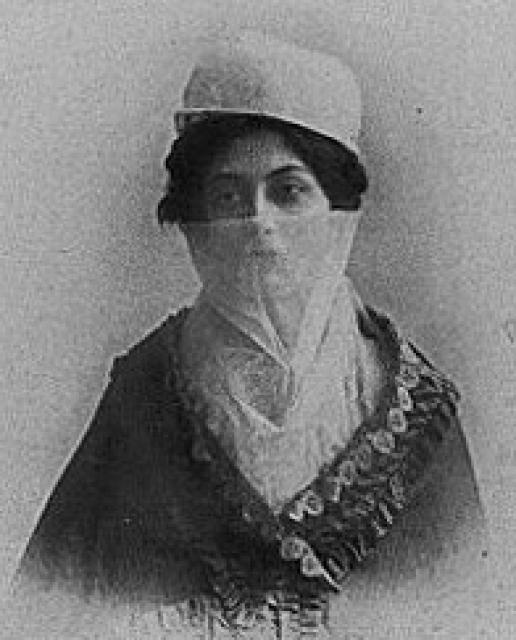
Halide Edip Adıvar
 Turkey
- Halide Edib Adıvar: Turkish Patriot, Author, and Suffragette
- Early Life and Education
- Literary Career
- Activism and Wartime Service
- Close Association with Atatürk
- Life After the War
- Political Career
- Literary Legacy
Halide Edib Adıvar: Turkish Patriot, Author, and Suffragette
Halide Edib Adıvar was a renowned Turkish political and social activist, novelist, and suffragette who made significant contributions to Turkish society. Her unwavering advocacy for women's rights, her role in the liberation movement, and her prolific writings earned her widespread acclaim.
Early Life and Education
Halide Edip was born in Istanbul, Ottoman Empire, in 1884. She received an exceptional education, studying Arabic and mathematics as a child and graduating from the American College for Girls in 1901. The college played a vital role in shaping her progressive views and desire for social reform.
Literary Career
Halide Edib began her literary career at a young age. In 1897, she translated Abbott Jacob's "The Mother," earning the Order of Mercy from Ottoman Sultan Abdul Hamid II. In 1909, she published her first novel, "Seviye Talip," which explored the challenges faced by women in Turkish society.
Activism and Wartime Service
Halide Edib's passion for social justice extended beyond her writing. In 1916, she served as headmistress of a Turkish school where she cared for Armenian orphans during the genocide. During the Turkish War of Independence (1919-1923), she joined the Turkish Armed Forces as a corporal and later a sergeant.
Close Association with Atatürk
Halide Edib developed a close friendship with Mustafa Kemal Atatürk, the founder of modern Turkey. She was present at his military headquarters and provided a detailed account of the capture of Izmir (Smyrna) in 1922. Her support and admiration for Atatürk's leadership played a significant role in the liberation movement.
Life After the War
Following the war, Halide Edib and her husband lived in Western Europe from 1926 to 1939. She traveled extensively, lectured in the United States and India, and continued to advocate for women's rights. Upon her return to Turkey in 1939, she became a professor at the University of Istanbul.
Political Career
In 1950, Halide Edib was elected to the Turkish parliament, where she served until 1954. She used her platform to further the cause of women's empowerment and social justice.
Literary Legacy
Halide Edib's novels, which predominantly featured strong and independent female characters, remain influential in Turkish literature. Her work continues to inspire and empower women around the world.