Hanns Johst
 Germany
- Biography of Hans Joost
- Early Works and Antisemitism
- Success and Allegiance to the Nazi Regime
- Post-War and Legacy
Biography of Hans Joost
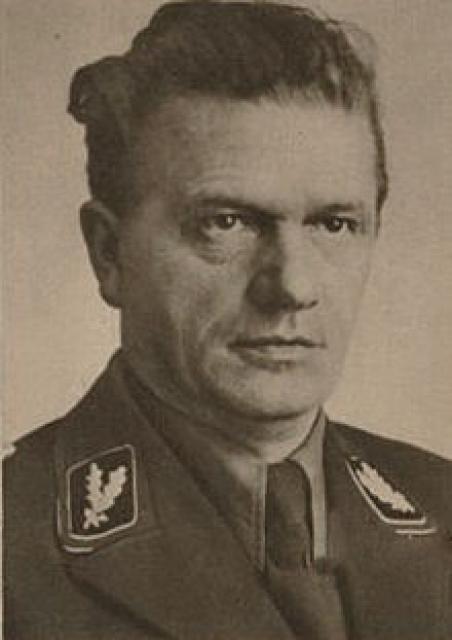
Hans Joost, a German playwright and Nazi poet laureate, was born in Seehausen, near Riesa, Saxony, in a family of primary school teachers. His youth was spent in Oschatz and Leipzig, during which he believed he would become a missionary. At the age of 17, Joost began working at a local institute and in 1910, he passed the necessary exams in Leipzig to study medicine, philosophy, and art history. In 1914, he volunteered for the army and returned in 1918, settling in Berg, Bavaria.
Early Works and Antisemitism
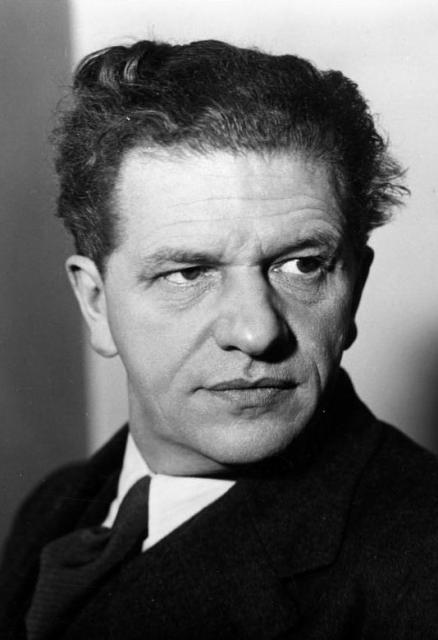
In his early works, Joost strongly embraced expressionism, as seen in his plays "Der Anfang" (1917) and "Der König" (1920). However, he later shifted to a more traditional and nature-philosophical style, evident in his plays "Wechsler und Händler" (1923) and "Thomas Paine" (1927). Joost's play "Der Einsame" served as an inspiration for Bertolt Brecht's "Baal," and Joost himself harbored antisemitic sentiments. In 1928, he joined the "Kampfbund für deutsche Kultur," an organization created by Alfred Rosenberg to combat Jewish influence in German culture. In 1932, Joost became a member of the Nazi Party, explaining his decision in one of his essays by his ideological alignment with Hitler.
Success and Allegiance to the Nazi Regime
One of Joost's most famous works was the play "Schlageter," which glorified the life and actions of German partisan Albert Leo Schlageter, aligning with Nazi party doctrines. His well-known quote, "When I hear culture, I release the safety on my Browning!" was featured in this play. In 1933, Joost signed the "Gelöbnis treuester Gefolgschaft," a vow of loyalty to Hitler drafted by a group of Nazi-supporting writers. His allegiance to the regime resulted in his appointment as president of the Reichsschrifttumskammer and the Deutsche Akademie für Dichtung in 1935. From that year onwards, only works that praised the Nazis or were deemed harmless by party members were accepted into the Union of Writers, with the exclusion of Jewish writers.
Post-War and Legacy
Joost's career flourished during this period, and he was included in the list of the Reich's most important creators in 1944. He also held positions within the SS. However, the defeat of Germany in World War II abruptly halted his successful trajectory. Joost was first interned by the Allied forces and then faced trial for his actions. Although he spent only three and a half years in prison, he was unable to regain his prominence as a writer, despite his continued efforts. Hans Joost passed away on November 23, 1978.


