Pere Bosch i Gimpera
 Spain
Spain- Early Life and Education
- Academic Career in Barcelona
- Post-War Emigration
- Scholarly Contributions
- Recognition and Honors
Early Life and Education
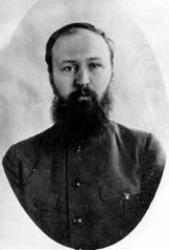
Jordi Bosch-Gimpera was born in the Catalonia region of Spain in 1894. He pursued his studies with zeal, earning doctoral degrees in Literature in 1911 and History in 1913. This academic foundation enabled him to secure a professorship in Greek Language.
Academic Career in Barcelona
From 1916 to 1939, Bosch-Gimpera held a prominent position as Professor of Ancient and Medieval History at the University of Barcelona. He also served as Director of the Archaeological Research Department of the Institute of Catalan Studies and Head of the Archaeology Department at the Barcelona Museum from 1916 to 1931.
Additionally, Bosch-Gimpera played an administrative role as Dean of the Faculty of Philosophy and Literature (1931-1933) and Rector of the University of Barcelona (1933-1939). His political affiliation with the Catalan Republican government led him to leave Spain after the Civil War.
Post-War Emigration
In the wake of the Spanish Civil War, Bosch-Gimpera sought refuge abroad. He found academic positions at various European and Latin American universities. His contributions extended beyond the Iberian Peninsula, as he delved into the ancient history of the Middle East and pre-Columbian civilizations.
Scholarly Contributions
Bosch-Gimpera was instrumental in organizing knowledge about the prehistoric period in the Iberian Peninsula. As a proponent of comparative archaeology, he drew parallels between the developmental stages of pre-Columbian and ancient European cultures. His work on Indo-European origins and the Near East earned him recognition and served as a foundation for subsequent research.
Recognition and Honors
Bosch-Gimpera's contributions to historical scholarship were widely acknowledged. He received honorary degrees and awards from numerous institutions worldwide. Notably, he became a Mexican citizen in 1971. His legacy continues to inspire historians and archaeologists to this day.