Hans Henze
 Germany
- Hans Werner Henze: A Post-World War II German Composer
- Post-War Career
- Departure from Dodecaphony
- Major Works
- - Elegie für junge Liebende (1961):A heartfelt ode to young love.
- Commissions
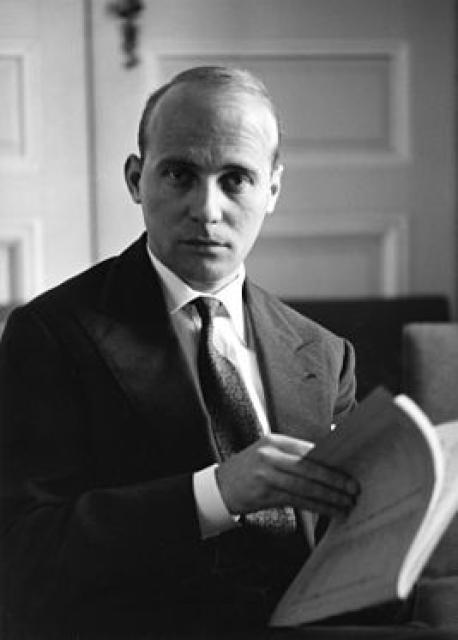
Hans Werner Henze: A Post-World War II German Composer
Early Life and EducationBorn on July 1, 1926, in Gütersloh, Germany, Hans Werner Henze's initial music lessons were disrupted by World War II, during which he was taken prisoner by the British.
Post-War Career
After the war, Henze worked in various theaters, including as artistic director and ballet master at the Wiesbaden Theater. Simultaneously, he studied Arnold Schoenberg's twelve-tone composition technique under his prominent follower, René Leibowitz.
Departure from Dodecaphony
Henze's later works deviated from the canons of dodecaphony, leading to their rejection by ardent Schoenbergian adherents. From 1953 onward, he resided in Italy.
Major Works
Henze's extensive repertoire encompasses operas, ballets, symphonies, chamber music cycles, and vocal genres. Notable operas include:
- Boulevard Solitude (1951):A contemporary rendition of the Manon Lescaut story, infused with a blend of blues, jazz, and dodecaphony.
- Elegie für junge Liebende (1961):A heartfelt ode to young love.
- Der junge Lord (1965):A captivating opera based on Oscar Wilde's play.
- Die Bassariden (1966):A grand opera with a libretto by Chester Kallman and W.H. Auden, featuring 63 singers and three orchestras.
- We Come to the River (1976):A poignant reflection on human loss and resilience.
- Die Englische Katze (1985):A charming opera based on a Christopher Isherwood novel.
Commissions
Several of Henze's works were commissioned, including:- Symphony No. 5 (1962):Commissioned by the New York Philharmonic Orchestra.
- Heliogabalus Imperator (1973):An allegorical musical allegory commissioned by the Chicago Symphony Orchestra.