Hans Sedlmayr
 Austria
Biography of Hans Sedlmayr
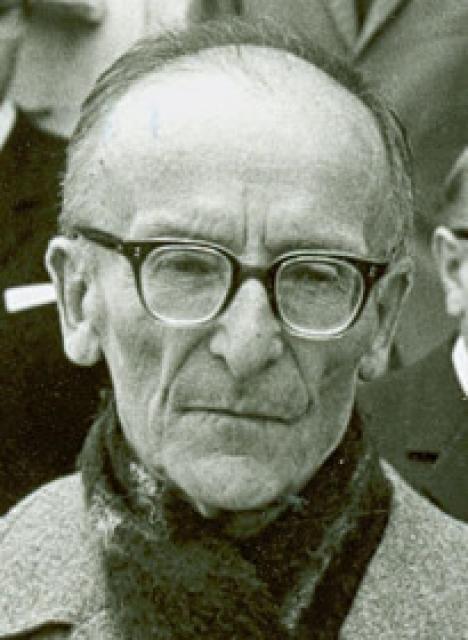
Hans Sedlmayr was an Austrian art historian. He was born on January 18, 1896, in the Austrian town of Hornstein, into a family of agronomists. During World War I, he served as an artilleryman and took part in combat operations in Syria as part of the Austro-Hungarian Expeditionary Corps. After returning from the front, Sedlmayr studied architecture at the Vienna University of Technology, followed by art history at the University of Vienna under the guidance of Max Dvořák and Julius von Schlosser.
Research and Academic Career
During his studies, Sedlmayr's research focus on the history of Baroque architecture in Austria and Italy, particularly the works of Fischer von Erlach and Borromini, became evident. After defending his habilitation dissertation in 1933, he became a lecturer at the Vienna University of Technology. Three years later, he became the head of the Department of Art History at the University of Vienna.
After the end of World War II, Sedlmayr, as a member of the Nazi Party, was dismissed from teaching, and he was forced to relocate to Bavaria. In 1951, he became the head of the Department of Art History at the University of Munich. During the post-war period, Sedlmayr continued his research on Gothic architecture, which culminated in his monograph "The Origins of the Cathedral" (1950). Another focus of his work was the writing of a "critical trilogy" consisting of "Loss of the Middle" (1948), "Revolution of Modern Art" (1955), and "Death of Light" (1964), as well as a series of essays on the history of European art from the 18th to the 20th centuries.
Later Years and Legacy
From 1965 until his last years, Sedlmayr lived in Salzburg, teaching art history at the university. He passed away on July 9, 1984, in Salzburg.