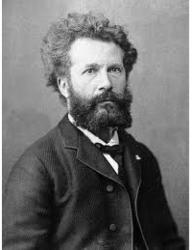
Harold Jeffreys
 Great Britain
Early Life and Education
Sir Harold Jeffreys was born on April 22, 1891, in Fatfield, County Durham, England. He received his early education at Armstrong College in Newcastle upon Tyne, where he excelled in mathematics and physics. In 1910, he continued his studies at St. John's College, Cambridge University, where he earned a double first in mathematics and natural sciences.
Academic Career
After graduating from Cambridge, Jeffreys remained there as a researcher, specializing in geophysics and astronomy. In 1917, he briefly served in the meteorological service during World War I. From 1922 until his retirement in 1958, he held various positions at Cambridge University, including the prestigious title of Professor of Astronomy and Philosophy from 1946 onwards.
Scientific Contributions
Sir Harold Jeffreys made significant contributions to the understanding of Earth's structure, dynamics, and evolution. His pioneering work on the Earth's compression, precession of its axis, and annual motion of its poles has left a lasting legacy in geophysics. He also developed the theory of tidal evolution for the Earth-Moon system and played a pivotal role in developing a tidal theory for the Solar System.
Monographs and Honorifics
Jeffreys' most notable publication was his seminal monograph "The Earth: Its Origin, History, and Physical Constitution." First published in 1929, this work has undergone six editions and remains a foundational text in geophysics. In recognition of his scientific achievements, Jeffreys was knighted in 1953.
Legacy
Sir Harold Jeffreys passed away in Cambridge on March 18, 1989, at the age of 97. His pioneering work in geophysics and astronomy has cemented his place as one of the most influential scientists of the 20th century. His legacy continues to inspire generations of researchers and advance our understanding of the Earth and its place in the Solar System.