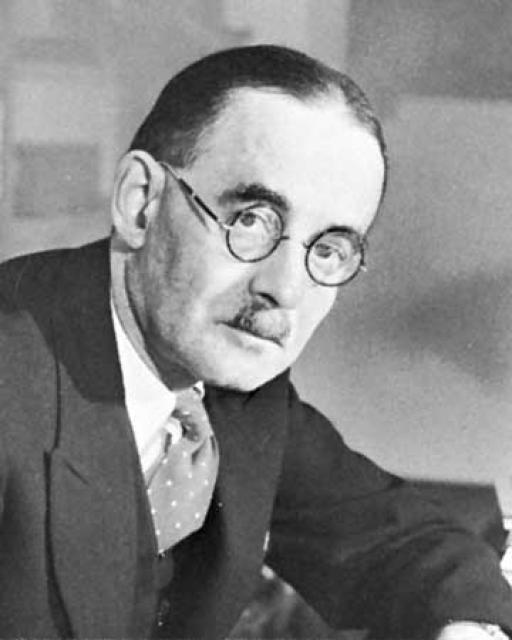
Harold Laski
 Great Britain
Biography of Harold Laski
Harold Laski was an English political figure, British political scientist, and writer, renowned for his contributions to the Labour Party. He graduated from the University of Oxford. In 1911, Laski married Frieda Kerry. That same year, he began his academic career at New College, Oxford University, where he became a member of the Fabian Society, an English socialist organization. In 1914, after earning his doctoral degree, he left England for Canada, where he lectured on history at McGill University. From 1916 to 1920, he taught at Harvard University and became close friends with prominent American lawyers, such as Supreme Court Justice Oliver Wendell Holmes Jr. and Harvard Law School professor Felix Frankfurter, who later also became a Supreme Court Justice.
In 1920, Laski returned to England and worked at the London School of Economics. From 1925 until his death on March 24, 1950, in London, he served as a professor of political science at LSE. Laski was an extremely productive scholar, having published around 30 books and hundreds of popular articles and pamphlets. In several books written during his teaching tenure in America, including "The Foundations of Sovereignty" (1921), "Authority in the Modern State" (1919), and "An Inquiry into the Problem of Sovereignty" (1917), he presented pluralistic doctrines of legal scholar Frederic William Maitland and Anglican priest John Neville Figgis and strongly criticized the idea of an "omnipotent" state.
After his return to England, Laski published the work "Grammar of Politics" (1925). In this book and other works from the 1920s and early 1930s, Laski established himself as one of the leading theorists of "democratic socialism." This non-Marxist doctrine called for transforming society through moral self-improvement of individuals and reconciling classes through gradual social reforms, rather than revolutionary means. In the book "Liberty in the Modern State" (1930), Laski defended the individual's right to freedom of thought and speech. In the 1930s, Laski became more pessimistic about the possibility of achieving socialism through democratic means. In his books "Democracy in Crisis" (1933) and "The State in Theory and Practice" (1935), he argued that even in England, violence would accompany the transition from capitalism to socialism.
During World War II, Laski advocated for using the advantages of temporary class and party unity in England to achieve promising socio-economic transformations through peaceful means, calling it the "revolution of consent." His last years, from 1946 to 1950, were dedicated to studying the conflict between the United States and the Soviet Union. In 1948, Laski published the work "American Democracy." Laski was an influential member of the British Labour Party and served on its executive committee from 1934 to 1949. He served as the chair of the party's executive committee in 1945 when it first gained parliamentary majority and formed a cabinet.